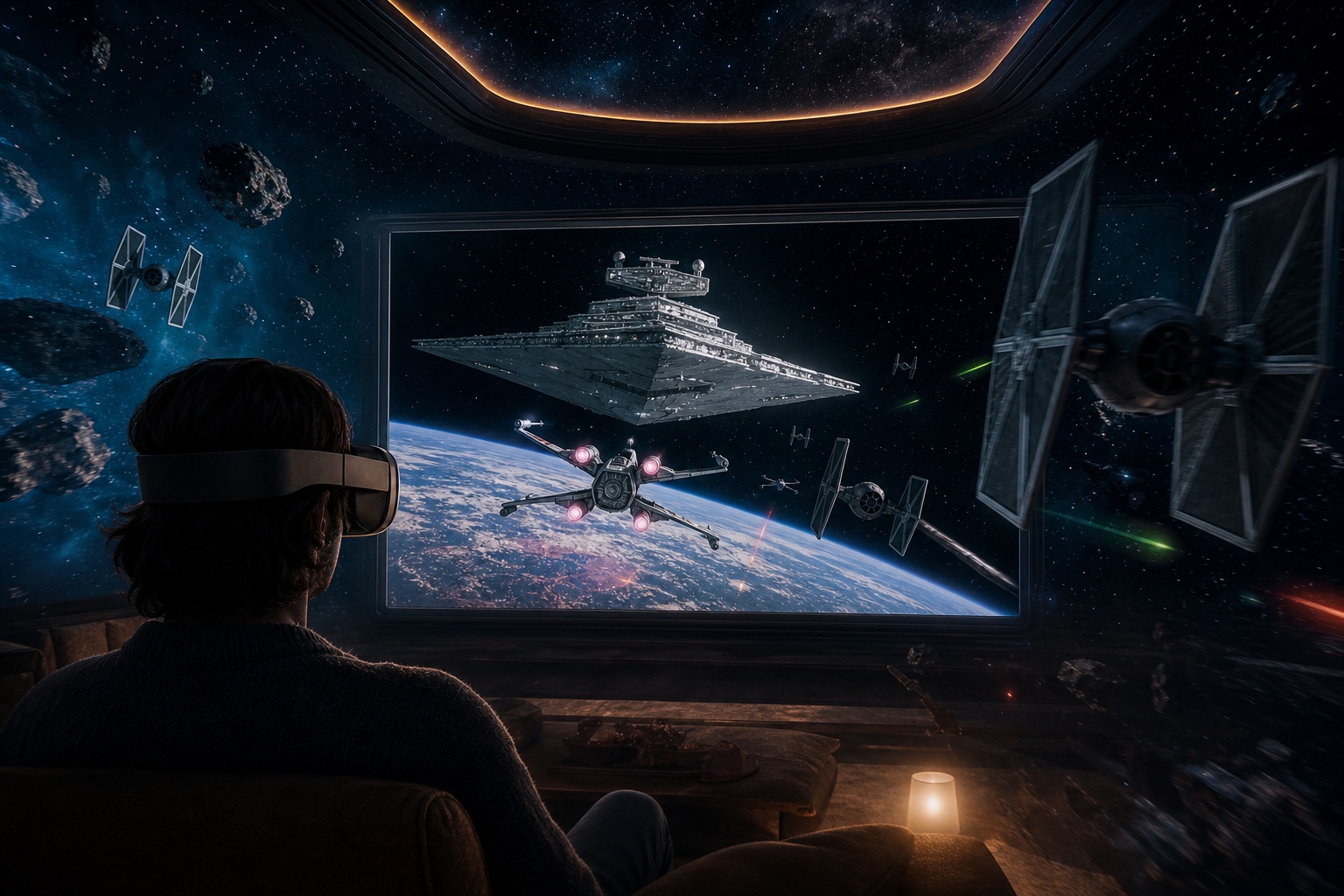
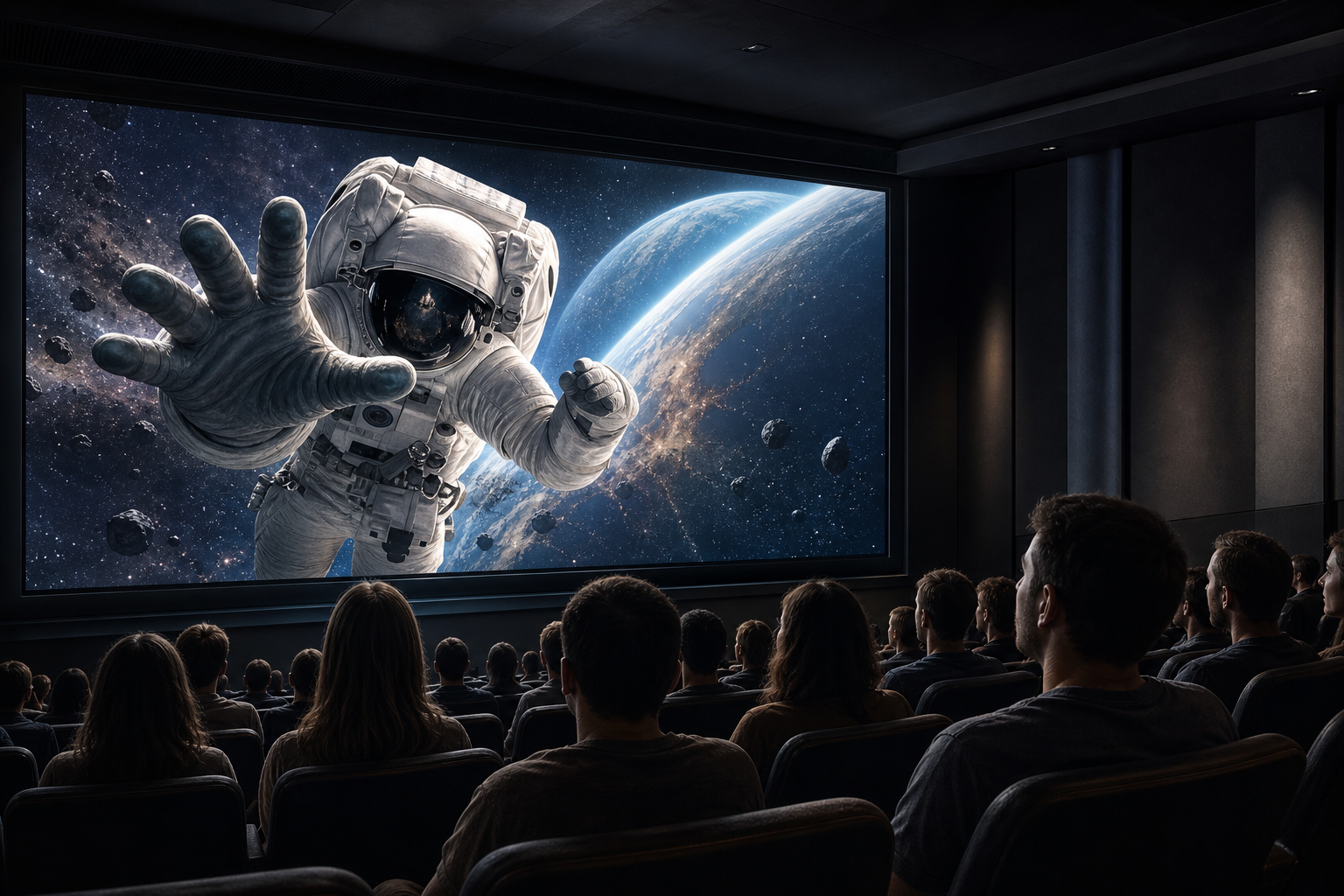
Disney Immersive Cinema by ILM is intended to preserve the film in its original form while extending selected moments into the viewer’s surroundings. It is an interesting hybrid of screen-ba...
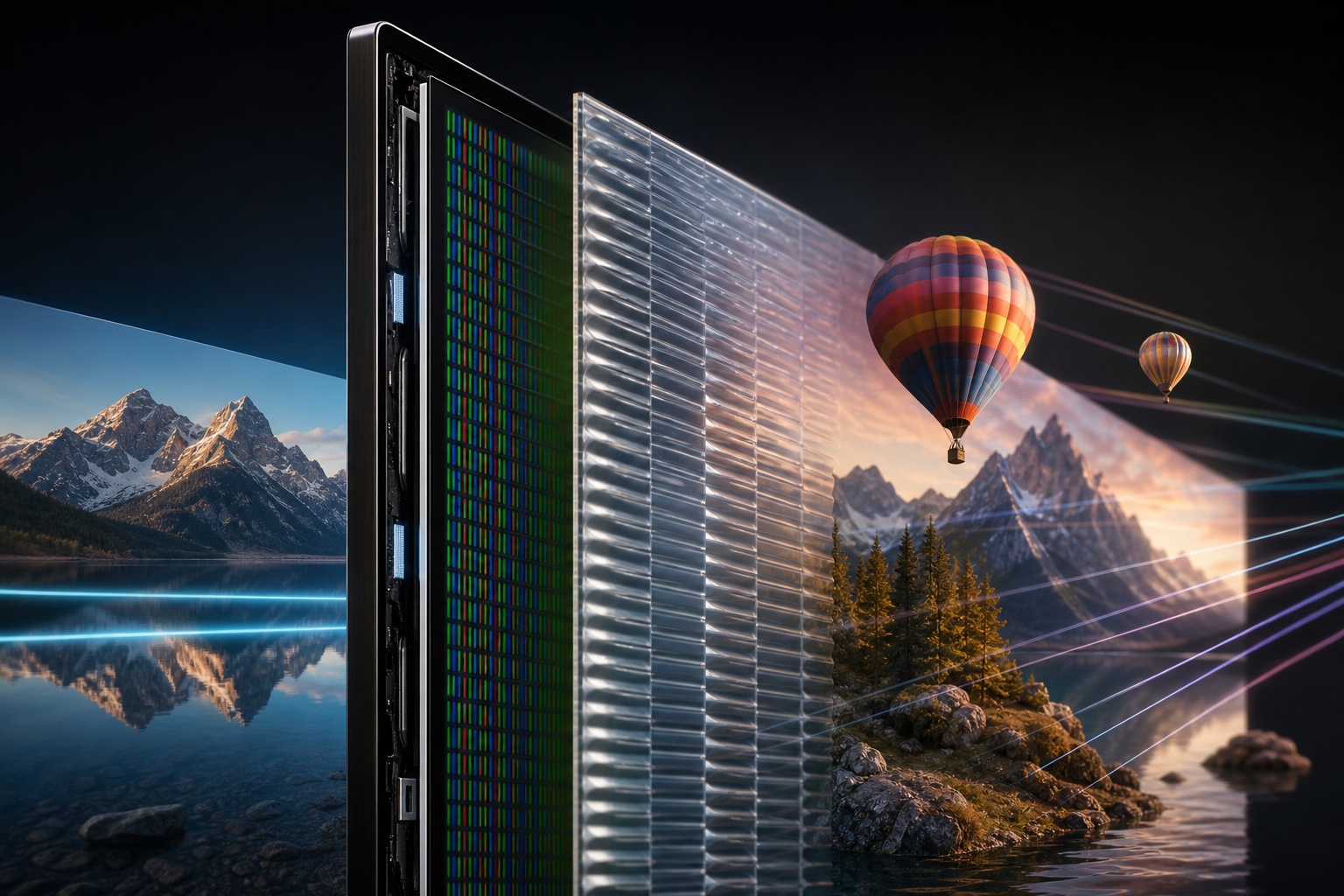
The full-color light-field display described in Nature uses a polarization-switchable metasurface lenticular lens. The demonstration combines 2D and 3D modes, a 100° field of view, and a 1.2...
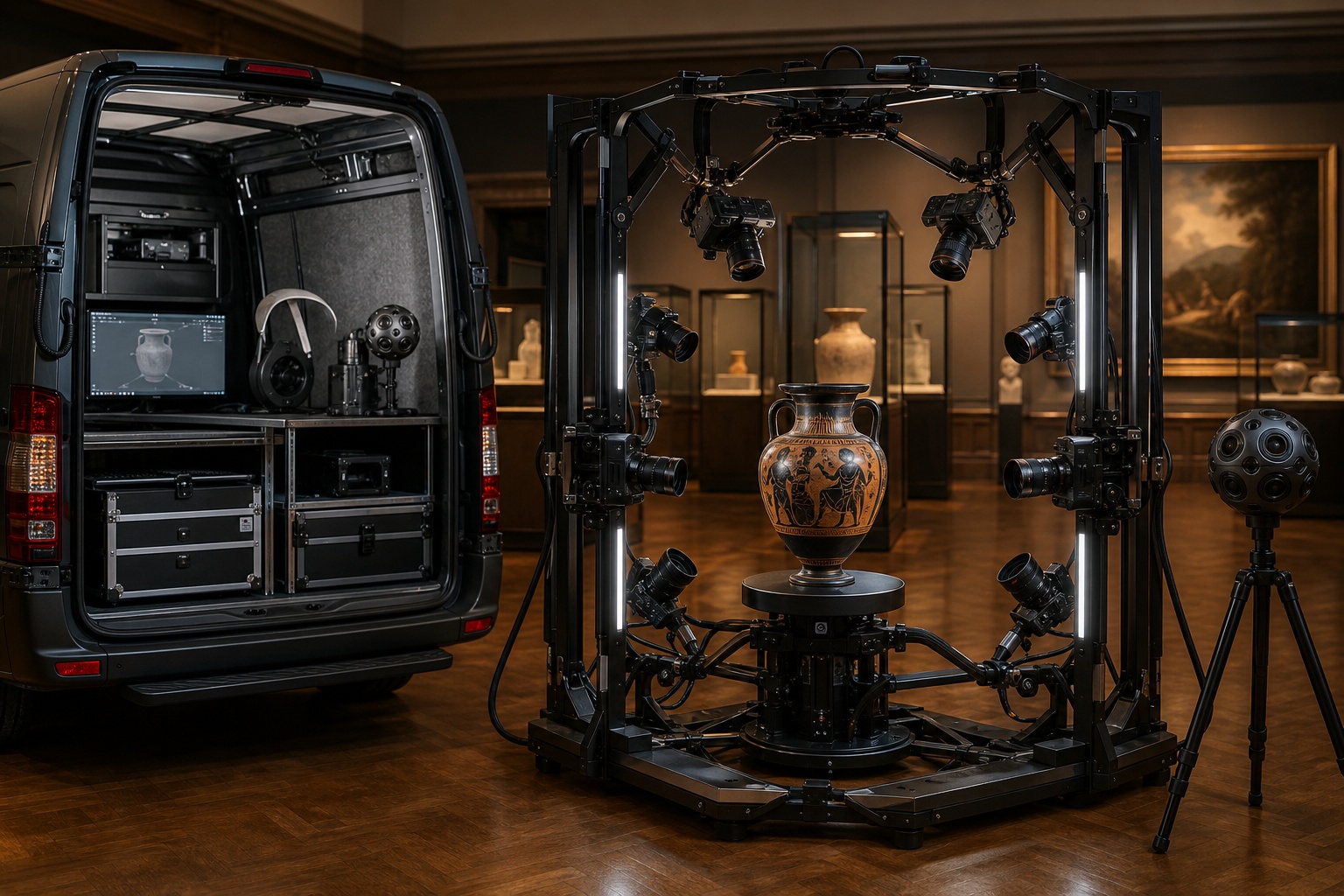
Australia’s Mobile 3D Artefact Digitisation Lab project combines mobility, robotics, eight cameras and 3D sound recording. We explain what has already been confirmed and what remains a goal...
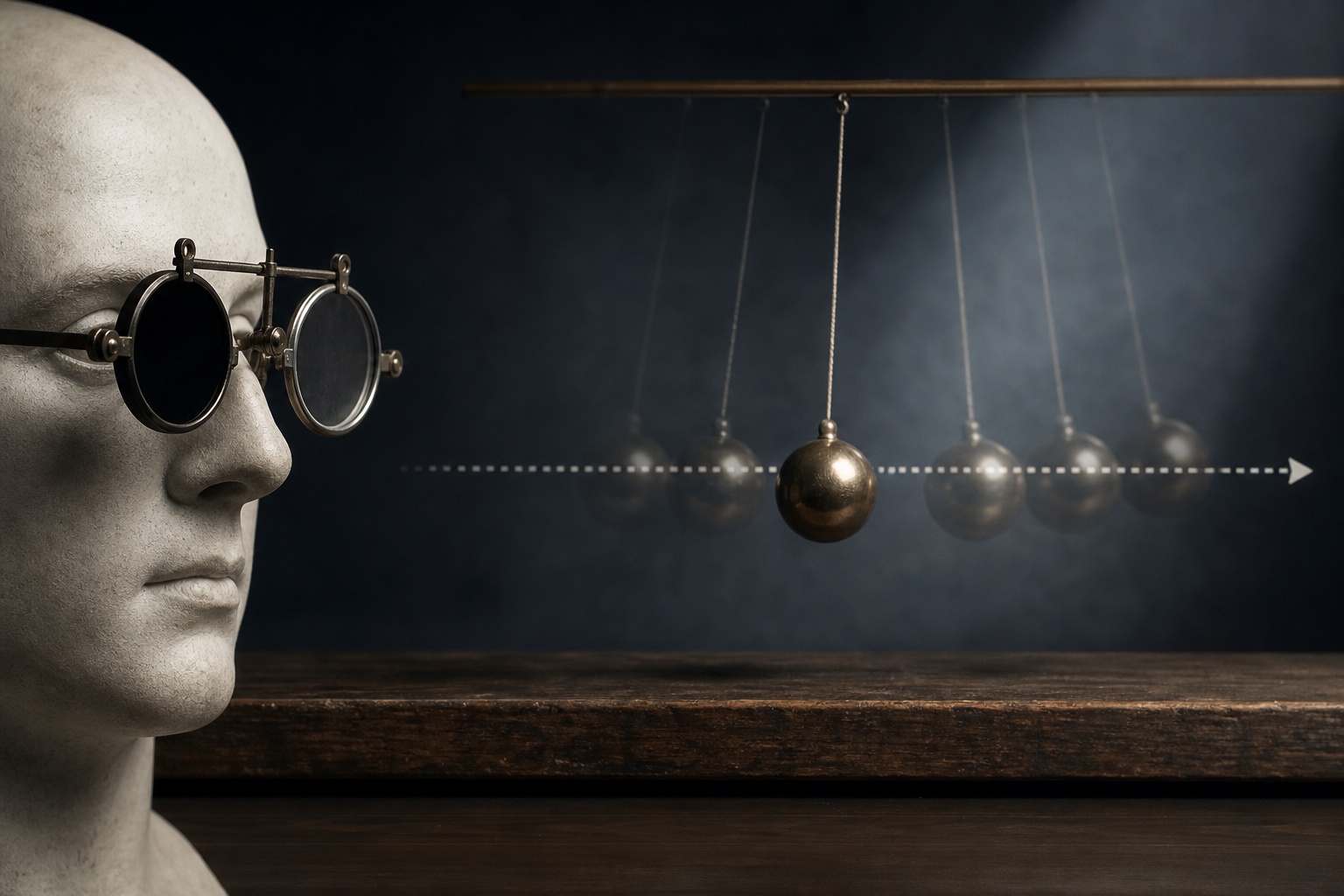
The Pulfrich effect requires neither two cameras nor two recorded perspectives. The impression of depth arises when dimming the image for one eye delays its processing while the observed obj...
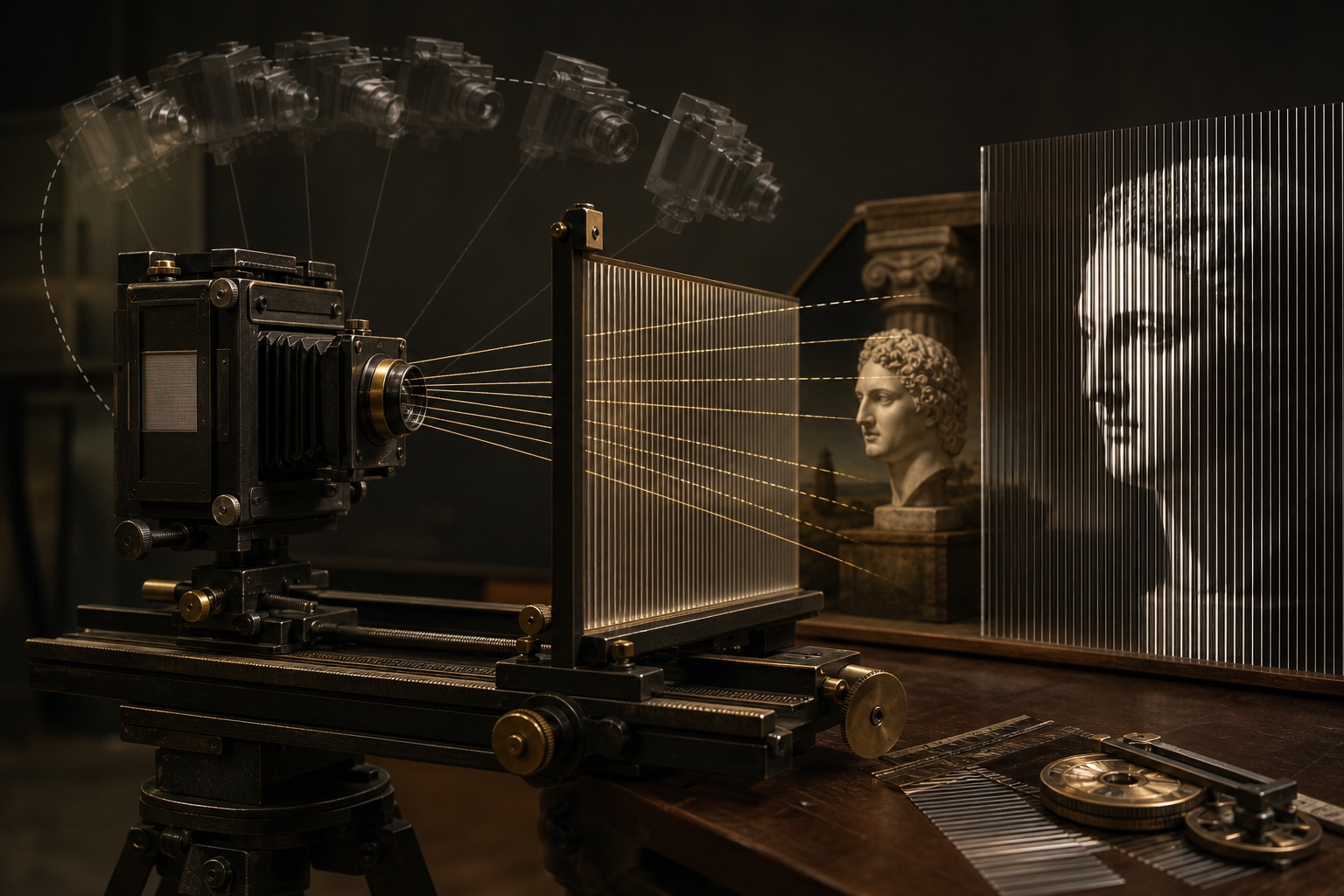
Before computers could automatically interlace views, lenticular photographs were produced using precisely synchronized movements of the camera, film, and screen. The direct method turned op...
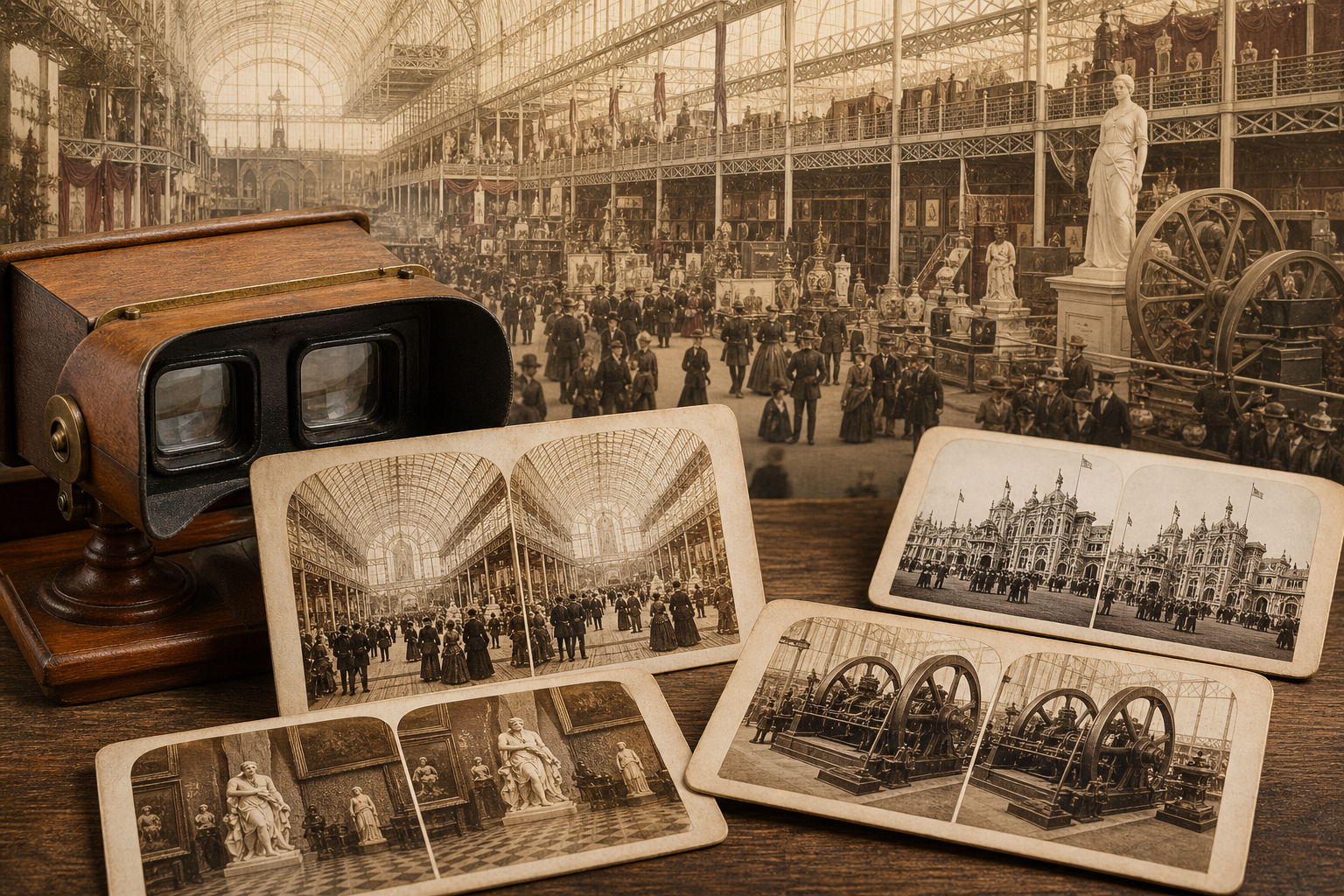
William England’s stereographs, published by the London Stereoscopic and Photographic Company, created an extensive visual record of the London exhibition: from its nave and national pavilio...
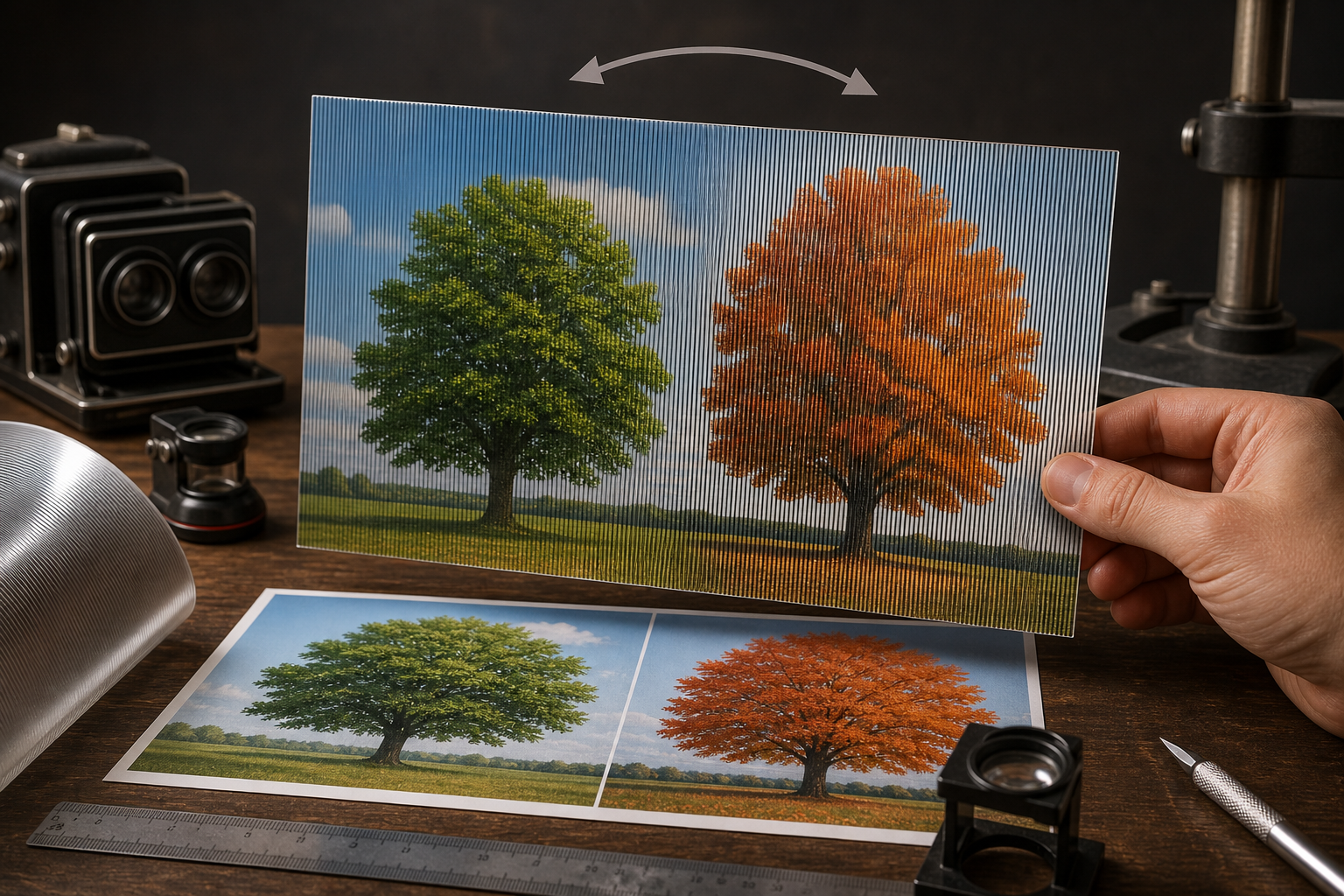
A two-frame flip is a good starting point for lenticular printing, but it requires more than simply combining two illustrations. The key factors are matching frames, knowing the lens LPI, pr...
A prototype featuring a MiniLED panel and a radial parallax barrier is a reminder that the idea of an autostereoscopic movie theater dates back to 1941. What is actually known about its mode...
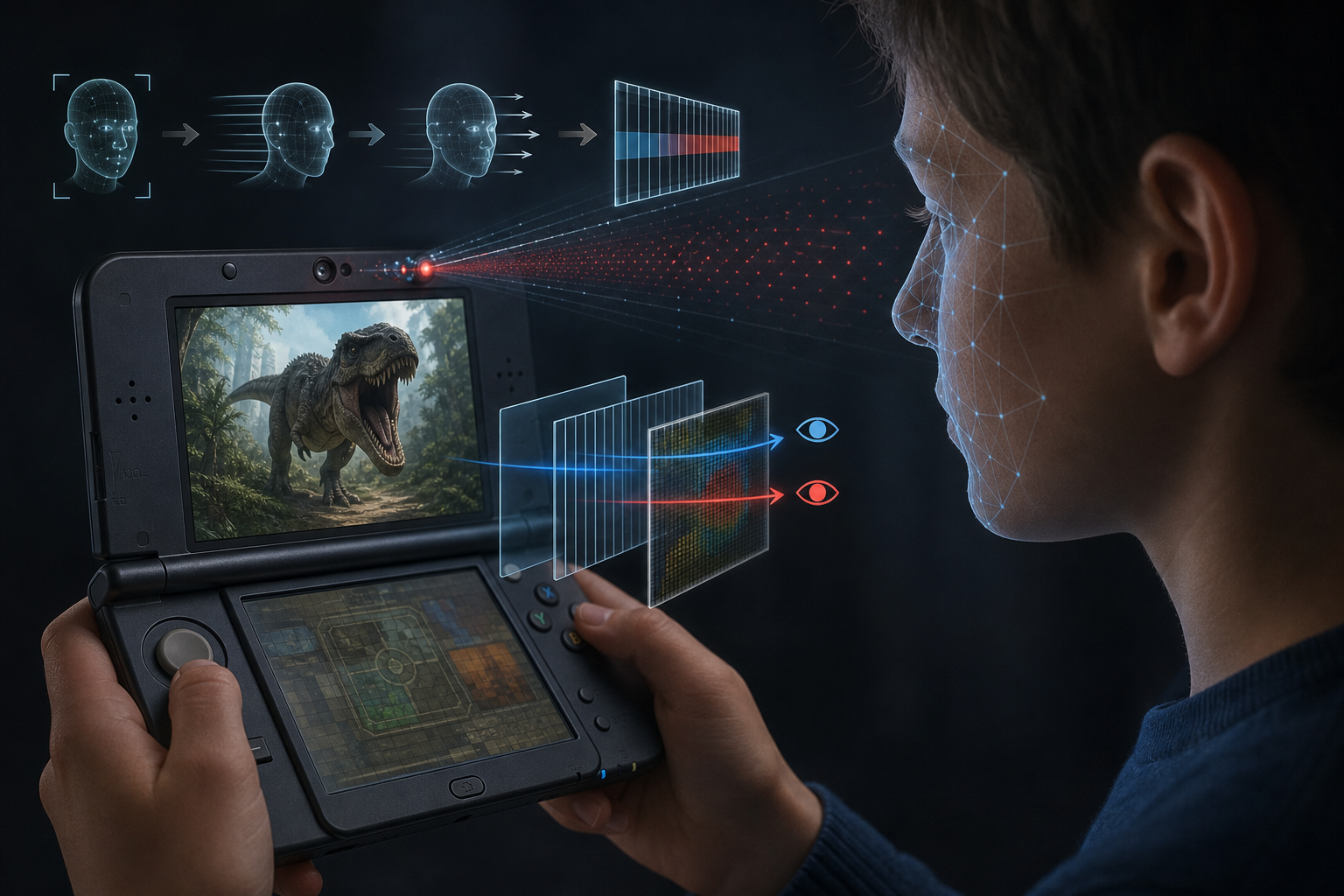
The Super-Stable 3D system combined a dynamic parallax barrier with face tracking, infrared light, and motion prediction. As a result, viewing the stereoscopic image no longer required the u...
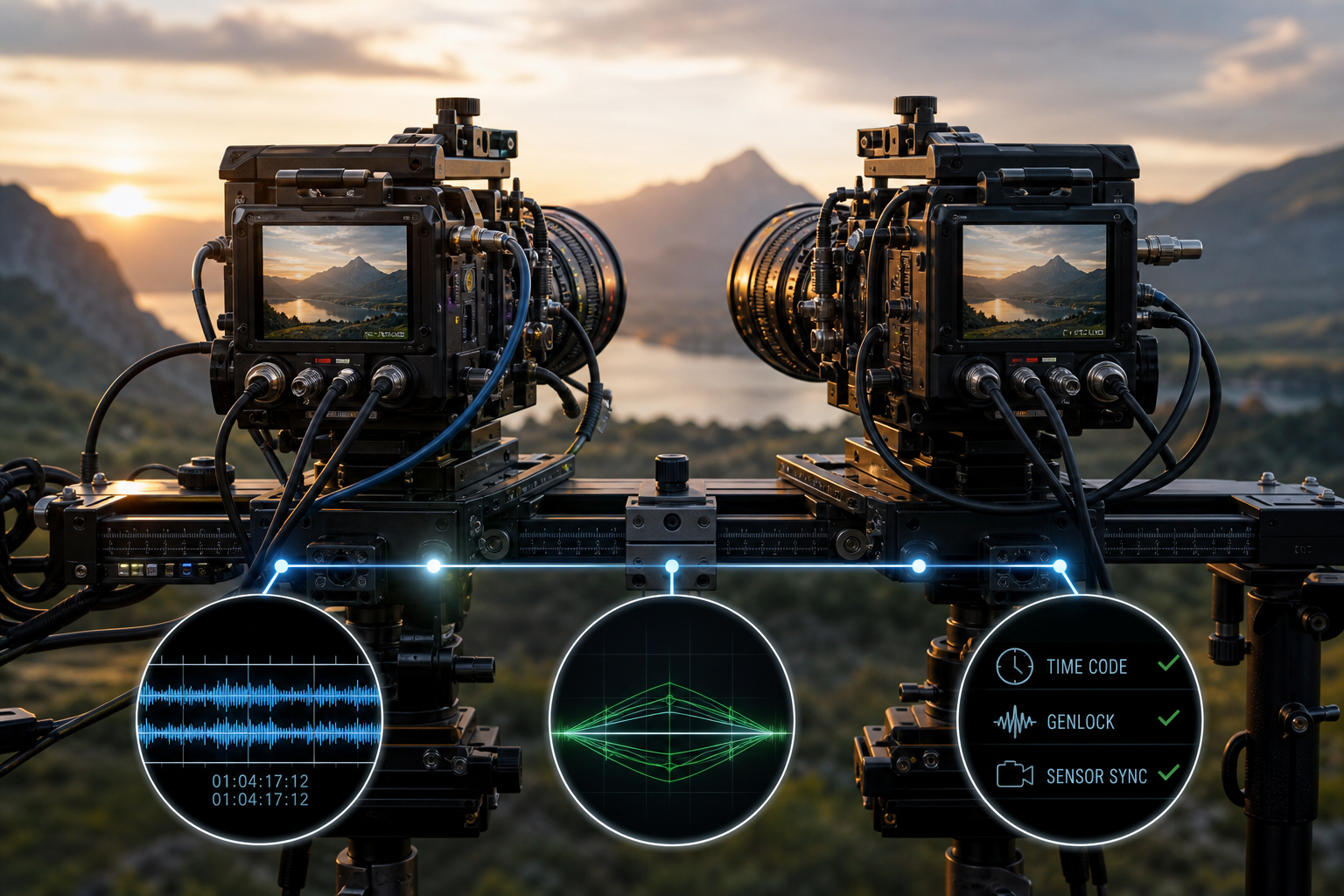
In a stereoscopic rig, matching timecode helps align files but does not guarantee simultaneous exposure of both sensors. We explain how to separate media organization, image synchronization...
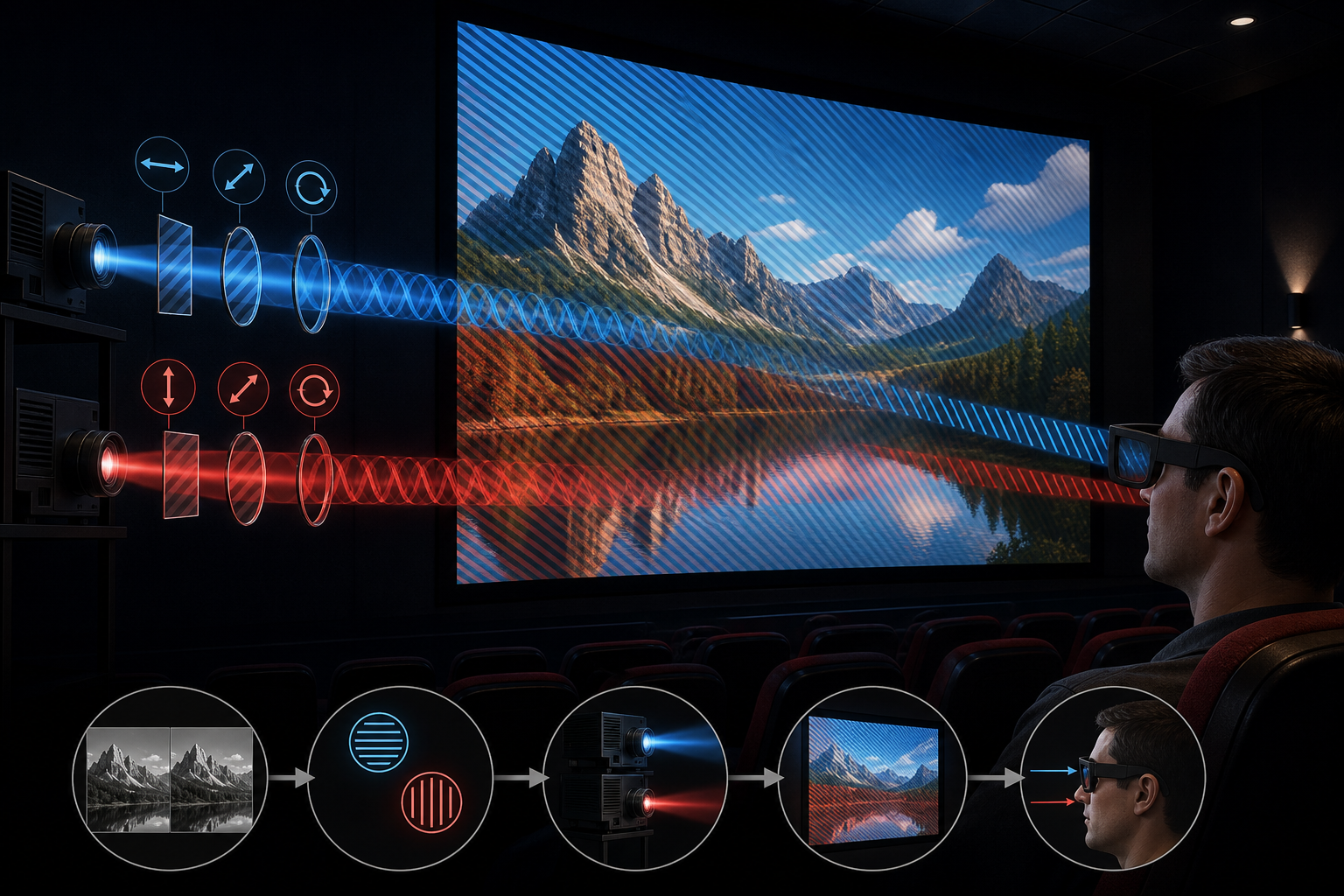
In polarization-based cinema, the two views of a stereo pair can occupy the same screen because they differ in the polarization state of the light. The appropriate filters in the glasses dir...
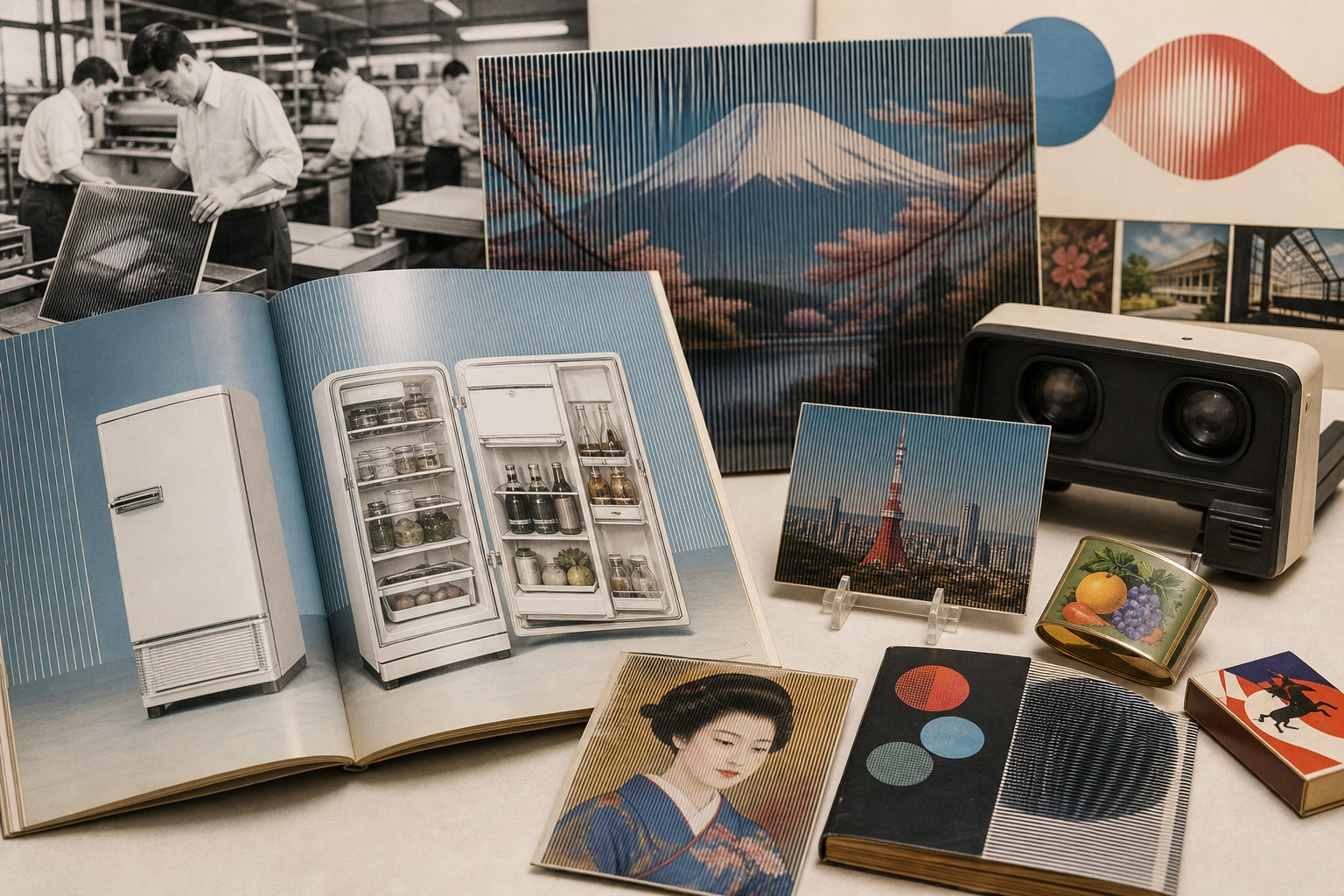
The history of Toppan’s lenticular program shows how, in the early 1960s, stereoscopic printing progressed from a single commercial project to a wide range of advertising and publishing medi...