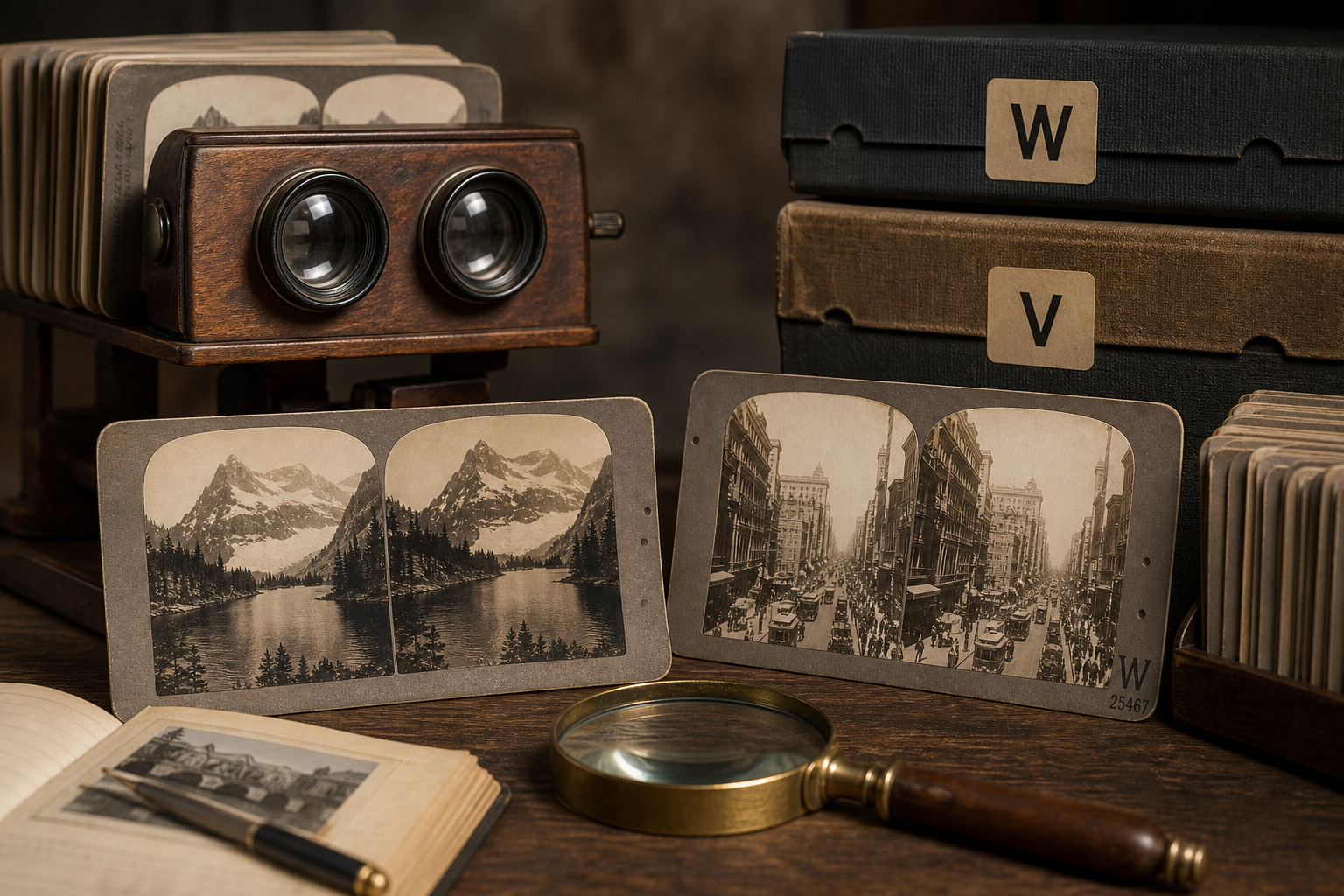
H.C. White Company ceased operations in 1915, but its images remained in circulation through Keystone View Company. The letter designations used for later editions now help trace the origins...
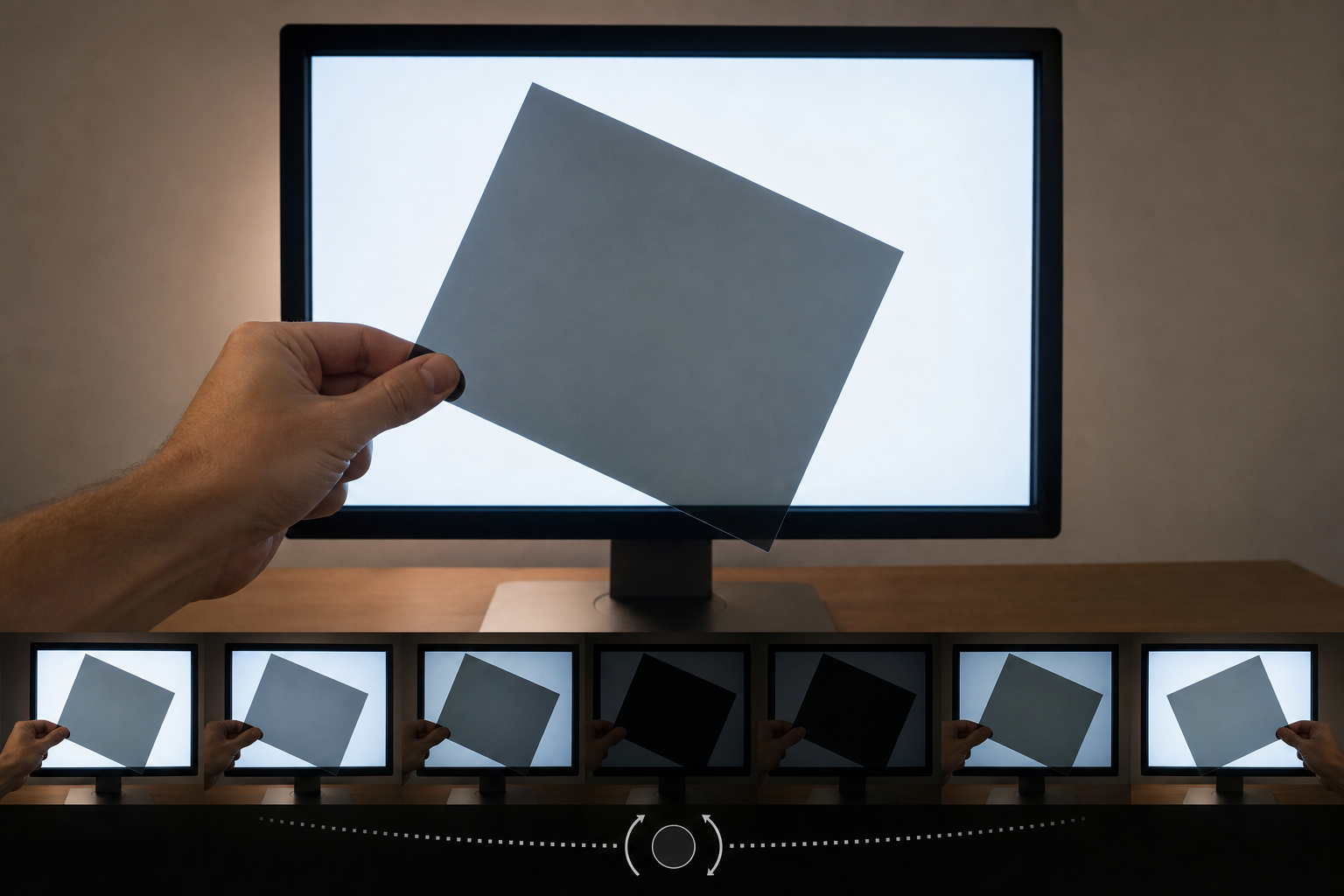
A bright LCD screen can serve as a simple source of linearly polarized light. By rotating the film being tested in front of it, you can find the positions of maximum transmission and greates...
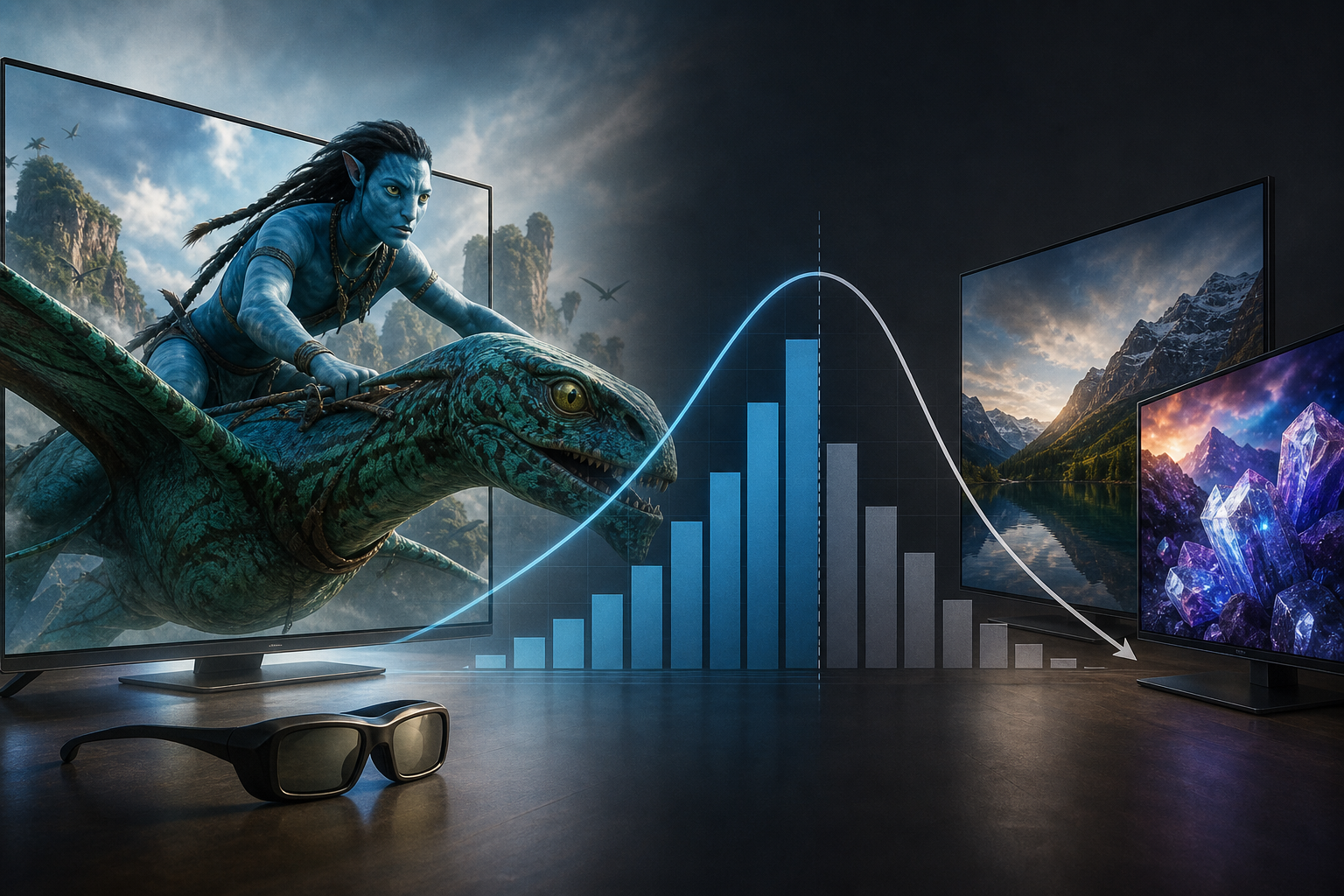
The theatrical success of “Avatar” helped bring stereoscopy into living rooms, while optimistic forecasts predicted rapid market growth. Just a few years later, manufacturers were primarily...
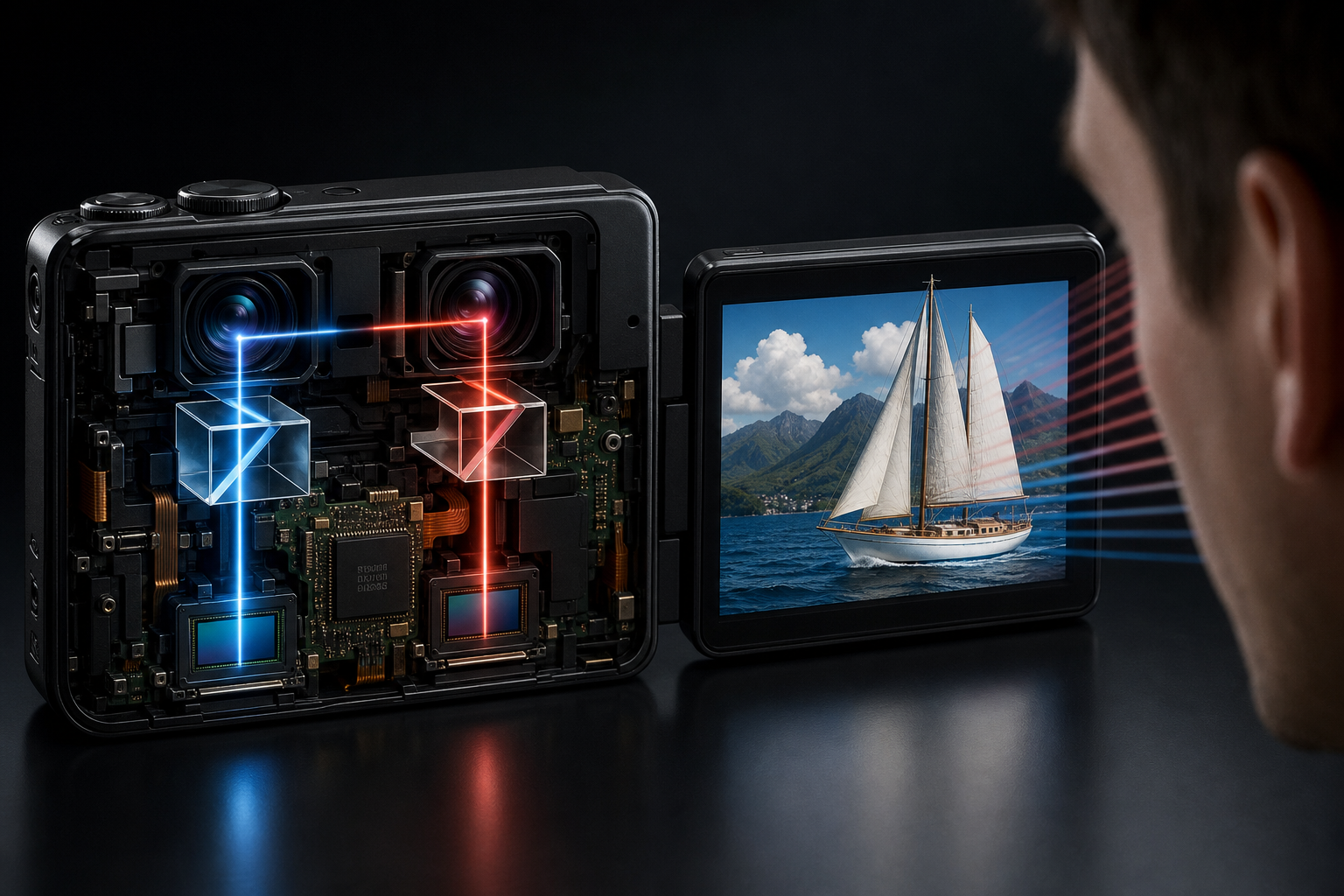
The FinePix REAL 3D W1 captured two images using separate lenses and sensors, then displayed the effect on a glasses-free 3D screen. Its design clearly illustrates the difference between ste...
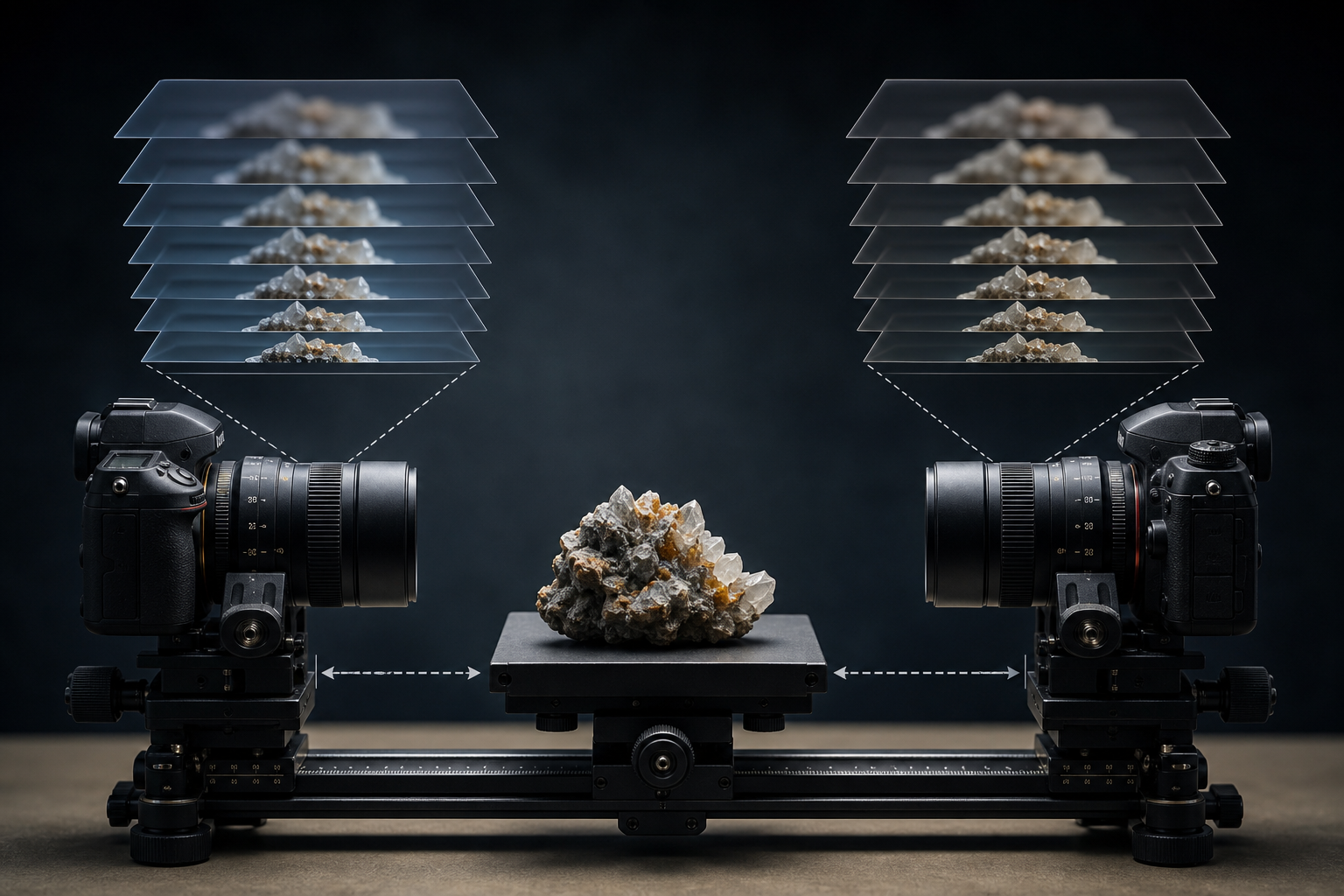
In stereo macro photography, both parallax and a very shallow depth of field must be controlled. A practical solution for stationary objects is to create two separate focus stacks from viewp...
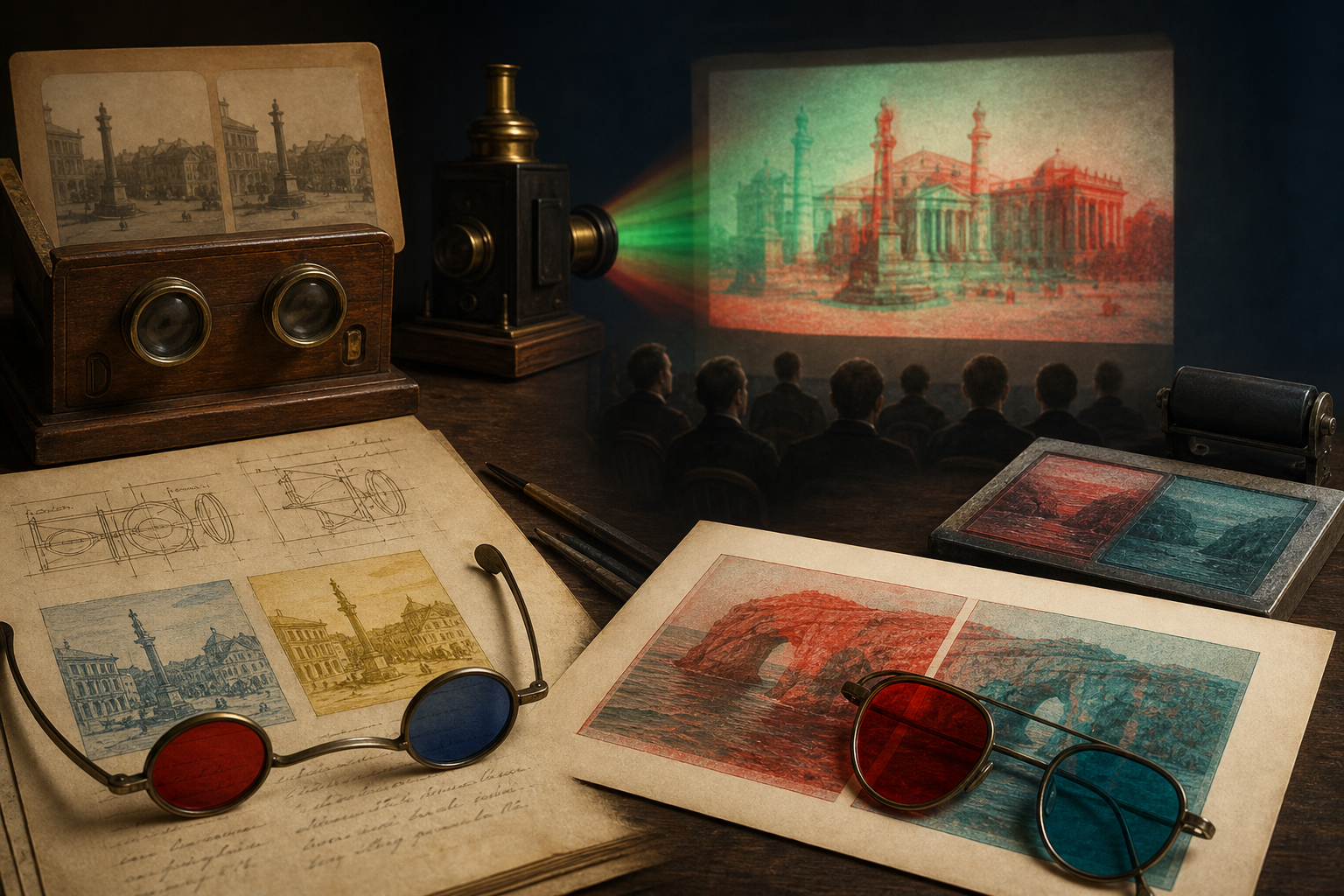
The anaglyph did not immediately appear in the form of a red–cyan image and paper glasses. Its development involved at least three distinct stages: experiments with color separation of views...
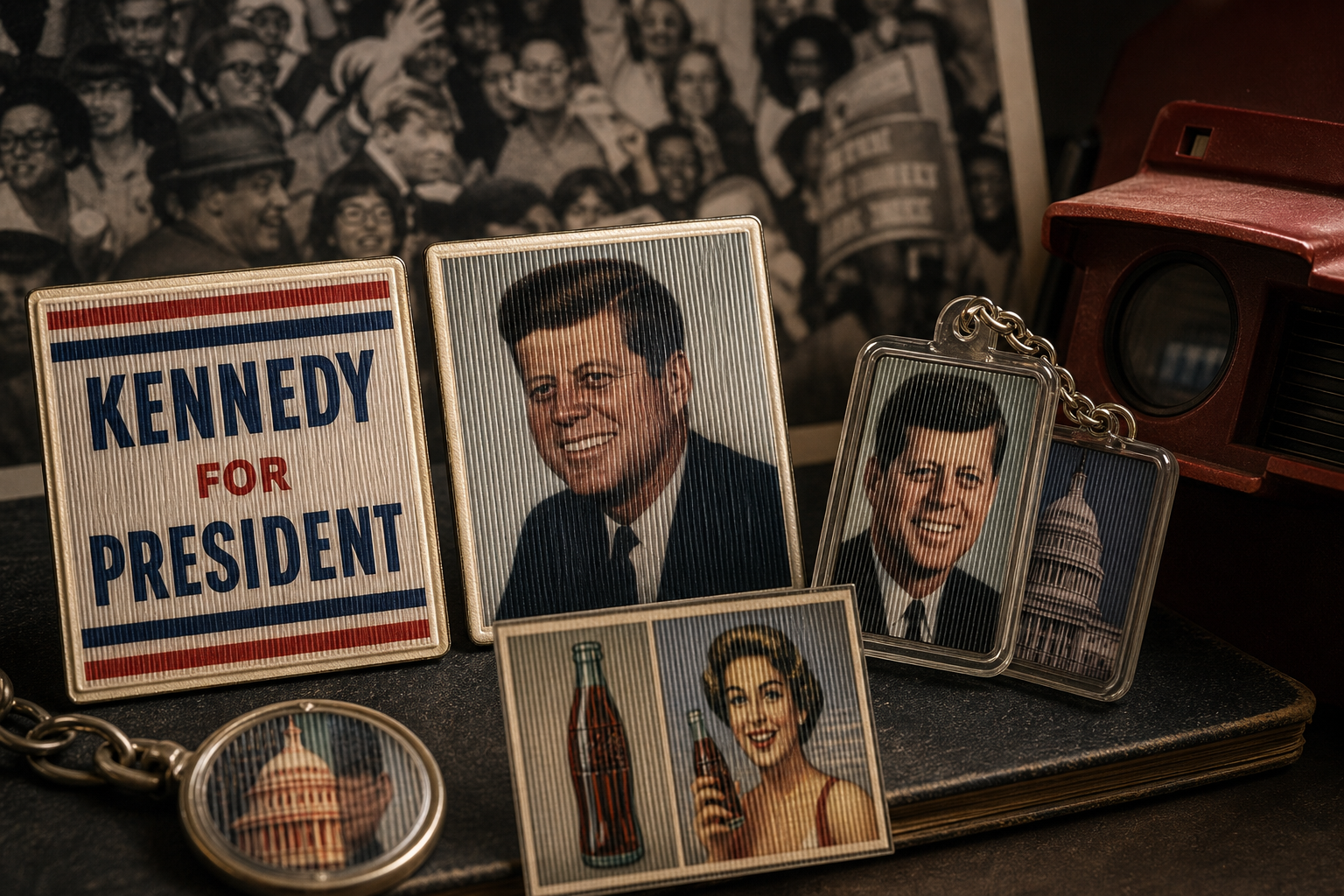
Campaign buttons, a keychain, and a miniature advertisement show that Vari-Vue lenticular products were not merely optical curiosities, but also carriers of brief messages.
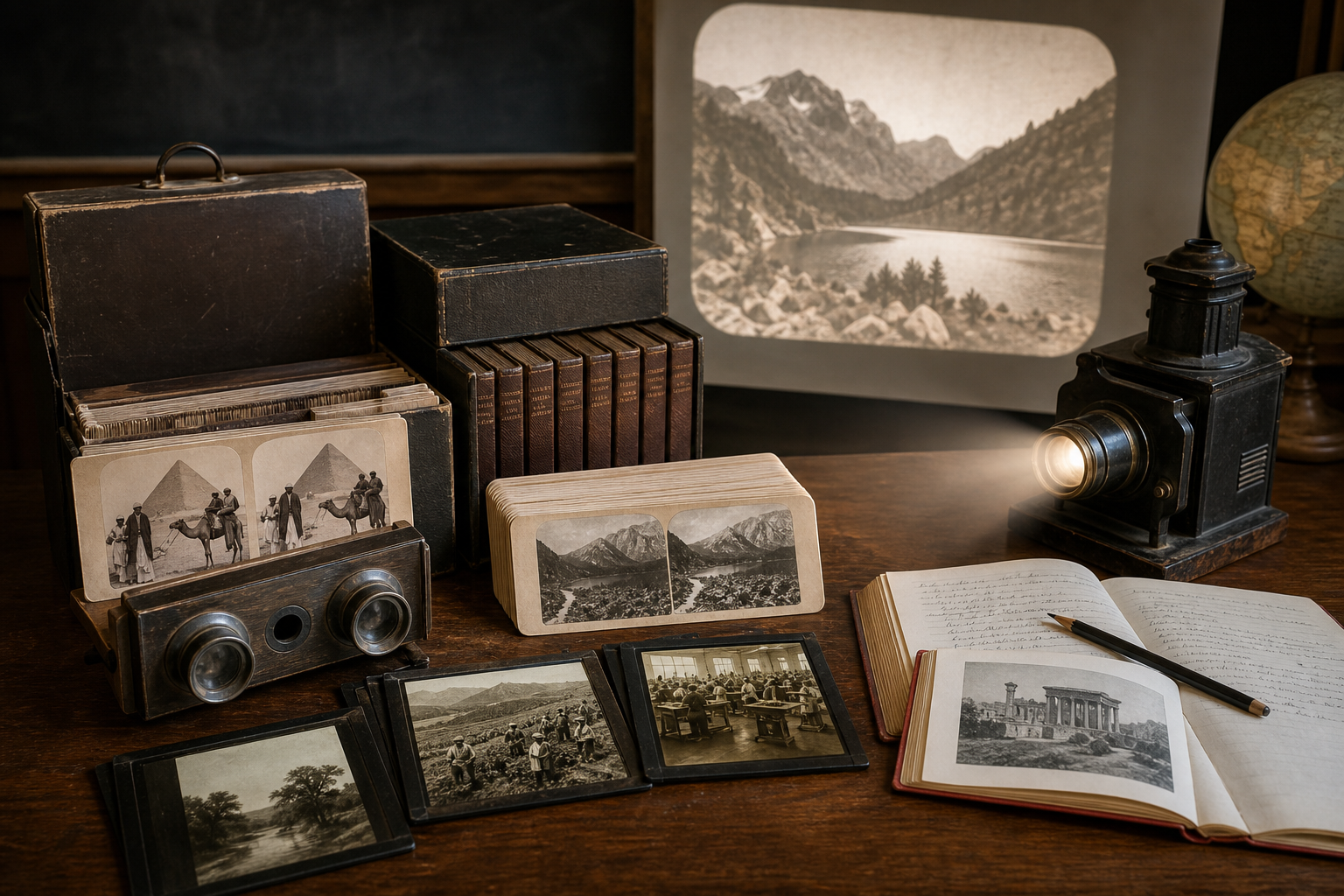
The Keystone “600 Set” combined 600 stereographs, projection materials, and a teacher’s guide. It was not merely a collection of images, but an extensive visual education environment.
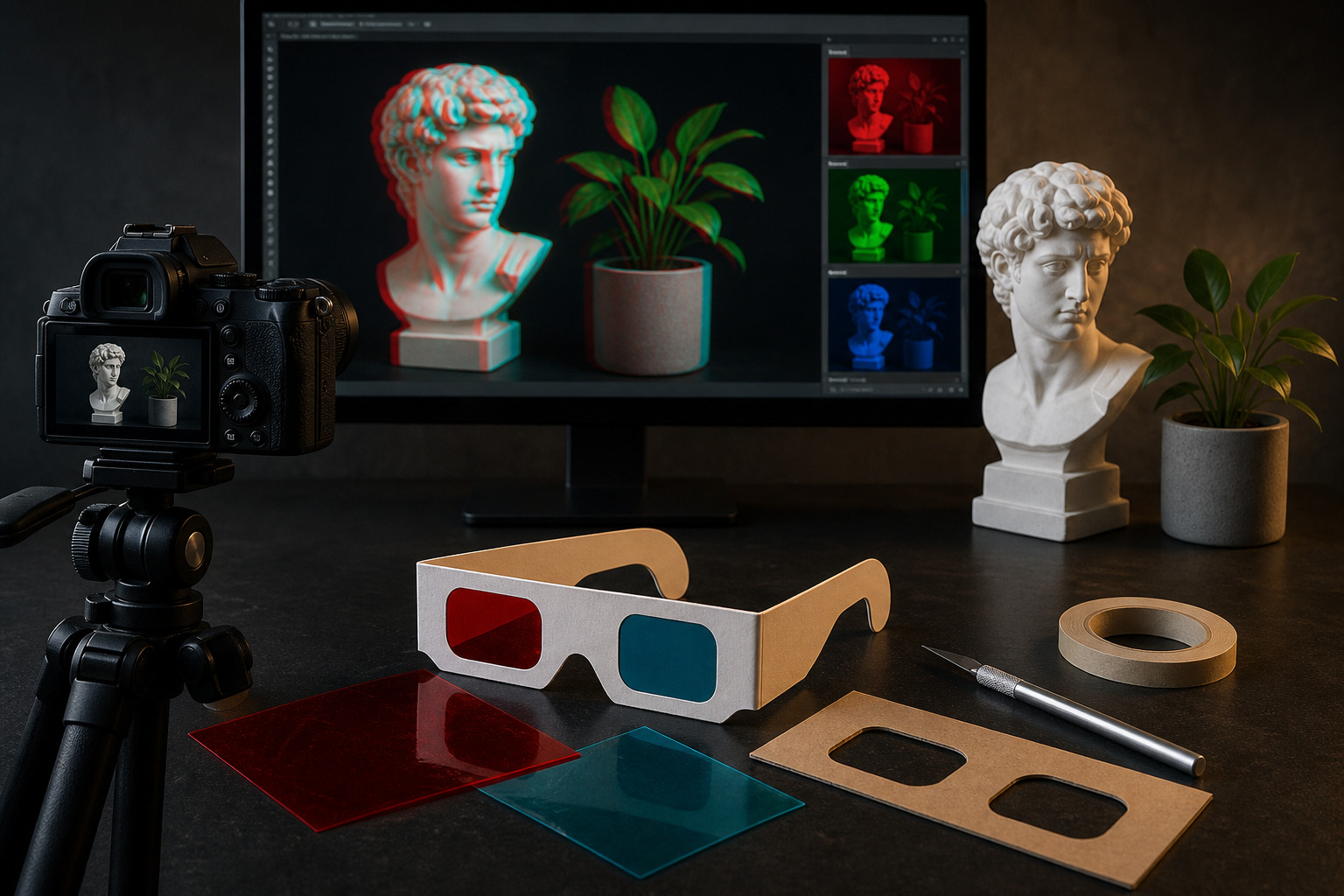
To create your own 3D image, all you need is a simple pair of glasses with filters, two shots of a stationary scene, and an editor that can combine RGB channels. We show the entire process a...
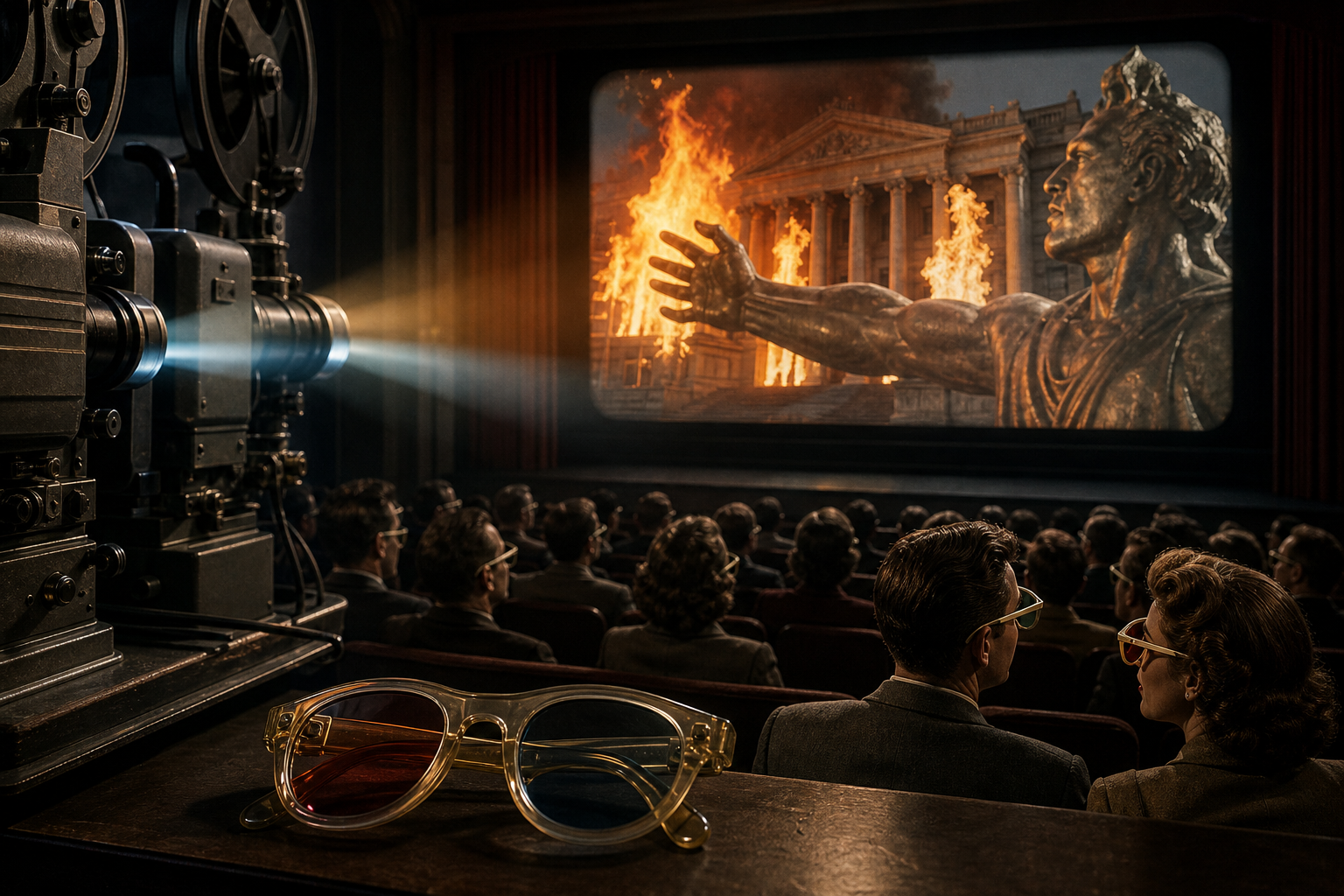
Red-and-blue glasses have become an icon of early 3D cinema. Yet during the 1952–1955 boom, major films were shown using two projectors and polarization, which preserved the full color of th...
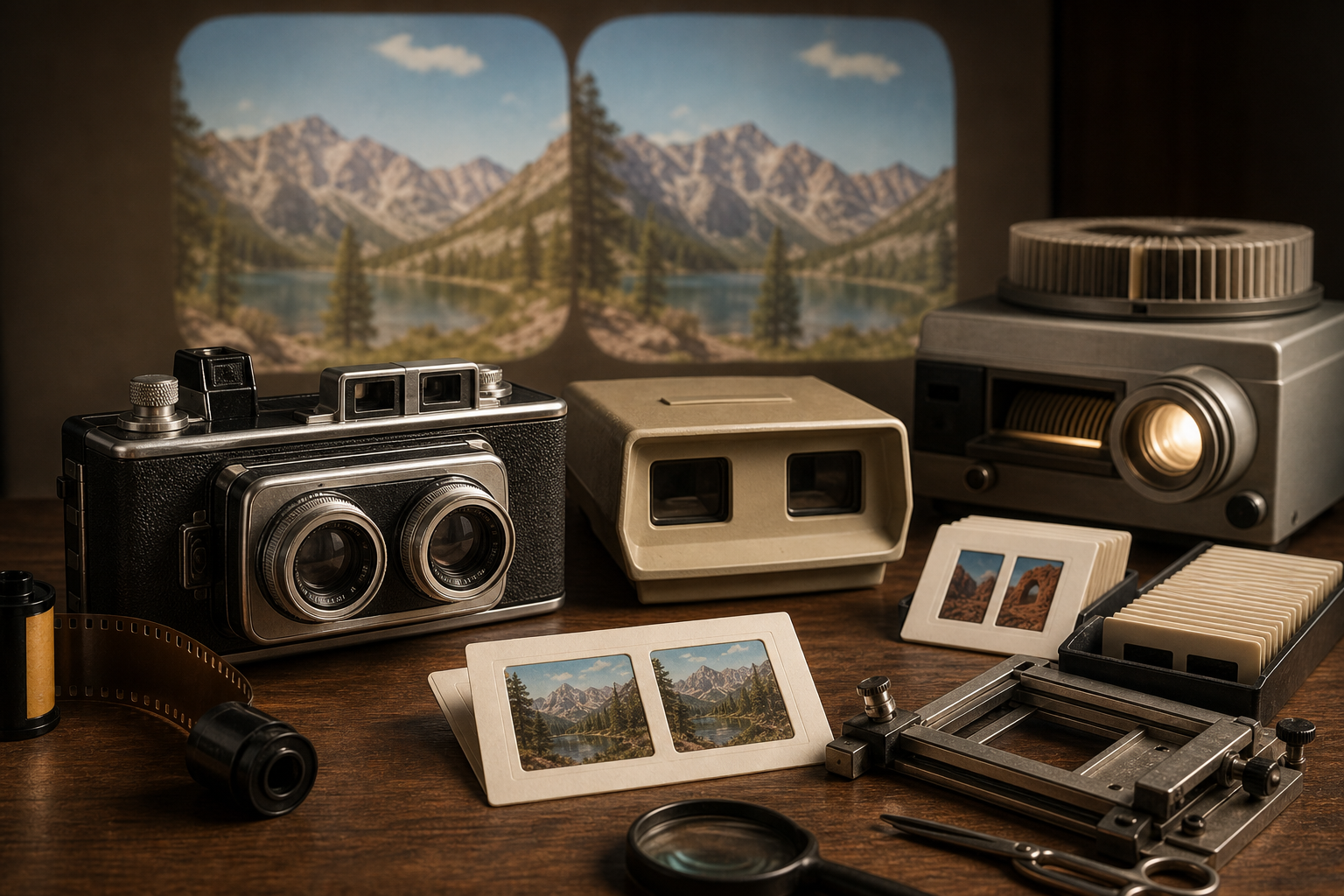
Introduced in 1947, the Stereo Realist was more than a twin-lens camera. The 5P format, viewers, projectors and slide-mounting tools formed a coherent system for home stereoscopic photograph...
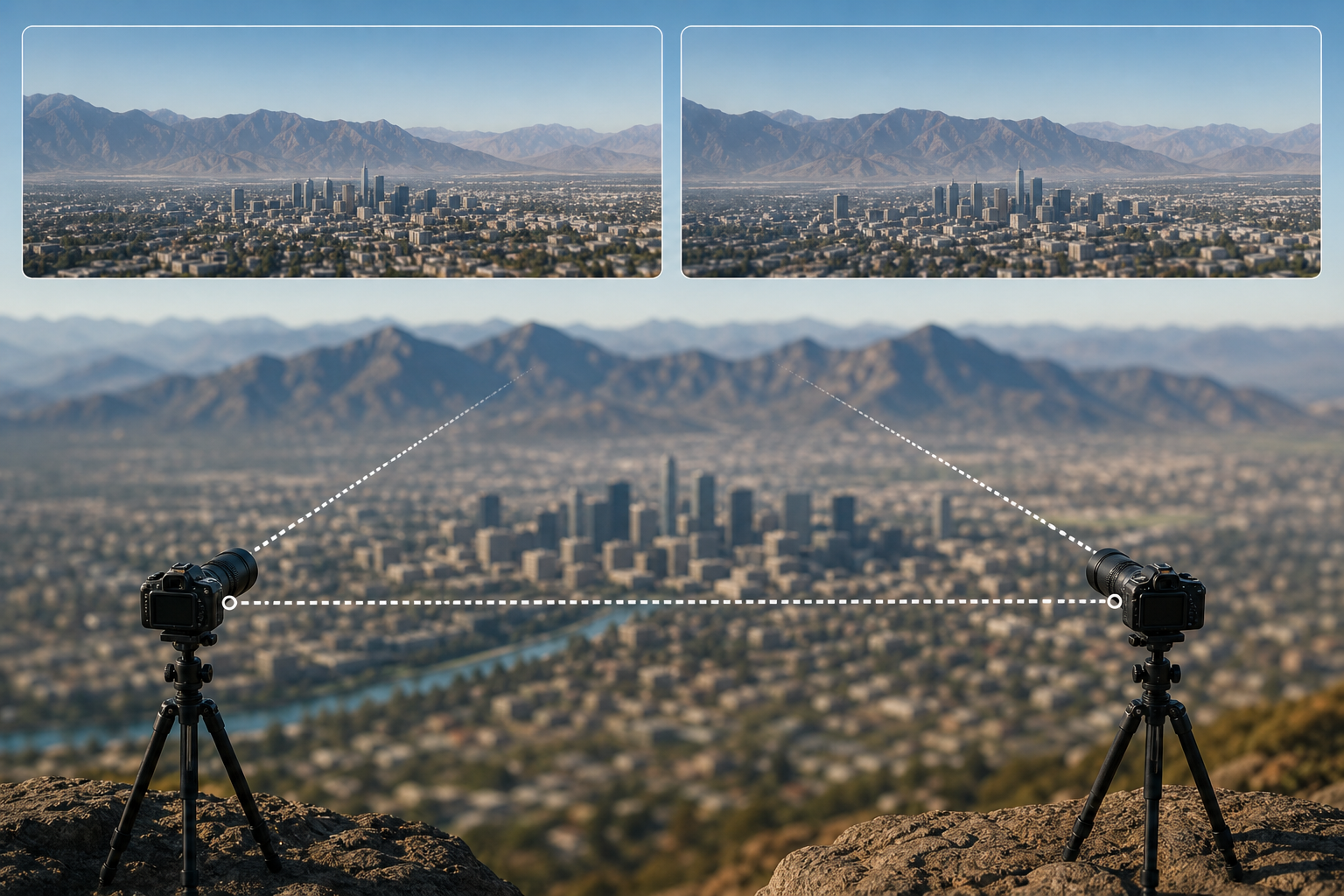
An increased stereoscopic base reveals the depth of distant landscapes, but it can also change the perceived scale of the scene. We explain what causes this effect and how to use it delibera...