
Dimming the image reaching one eye can make ordinary motion in a plane begin to resemble motion along a three-dimensional trajectory. However, this does not mean that a dark lens itself “adds 3D.” The Pulfrich effect results from the combination of two conditions: a difference in the processing time of signals from the two eyes and the motion of the observed object, especially motion with a horizontal component.
This distinguishes it from typical stereoscopy, in which each eye is shown an image from a slightly different perspective. In the Pulfrich phenomenon, apparent depth information may emerge while viewing a single moving scene. Its source is not a previously recorded stereoscopic pair, but the asynchronous processing of what the left and right eyes see.
From Pulfrich's Pendulum to the Modern Description
Carl Pulfrich described the phenomenon in 1922. His work appeared in a six-part series entitled Die Stereoskopie im Dienste der isochromen und heterochromen Photometrie in the journal Die Naturwissenschaften. The historical experiment remains clear today because it makes it possible to distinguish the object's actual path from the path perceived by the observer.
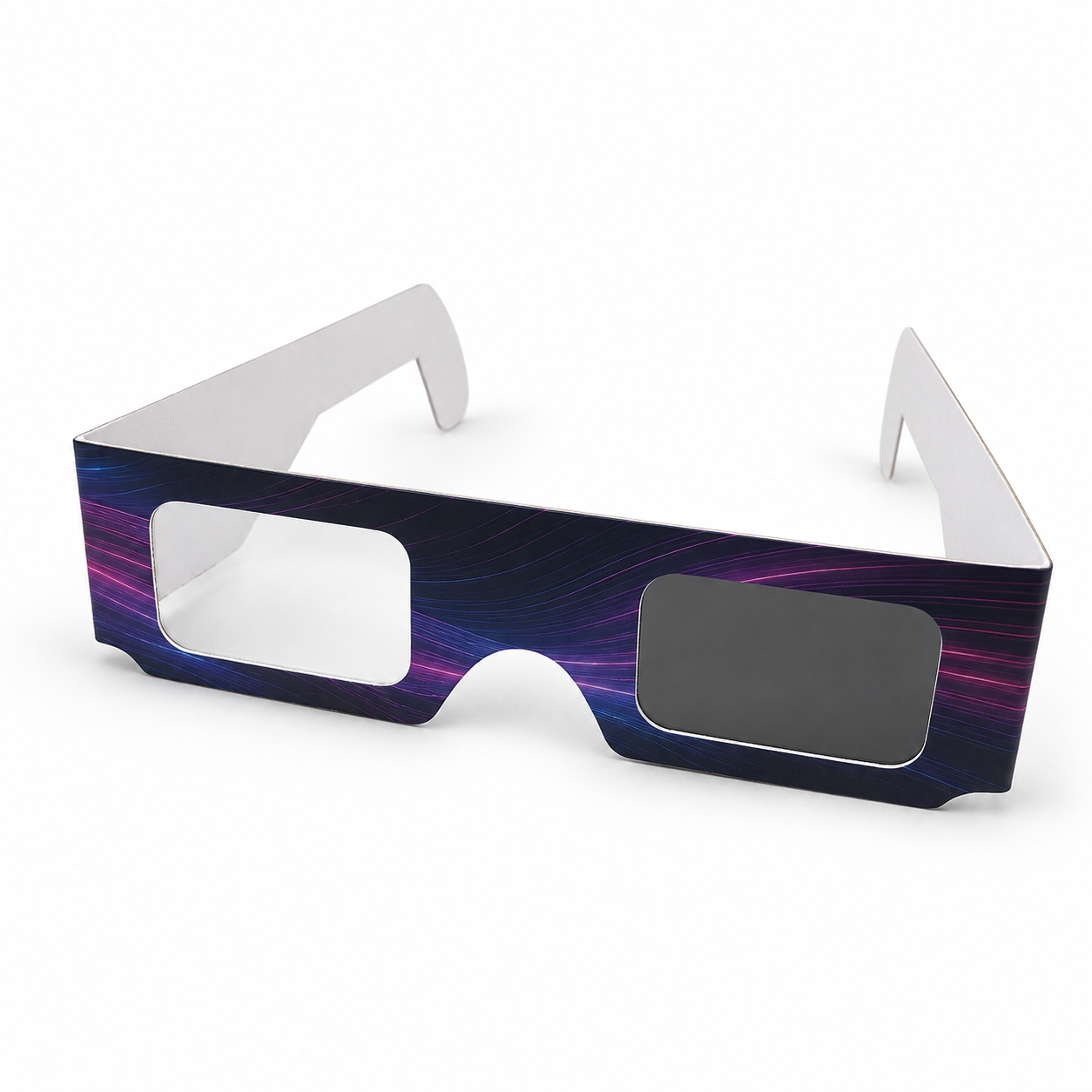
A classic example is a pendulum moving horizontally. Without an additional filter, the observer sees motion taking place in a single plane. When a neutral-density filter, also referred to as an ND filter, is placed in front of one eye, the same flat trajectory may be perceived as motion in depth. The pendulum then appears to move along an apparent three-dimensional path, even though its mechanical motion has not changed.
This example is particularly important because it shows the difference between stimulus and perception. The object does not begin to follow an actual orbit, nor is it shown from two previously prepared viewpoints. What changes is the way the visual system combines information arriving from the two eyes.
What Does a Neutral-Density Filter Do?
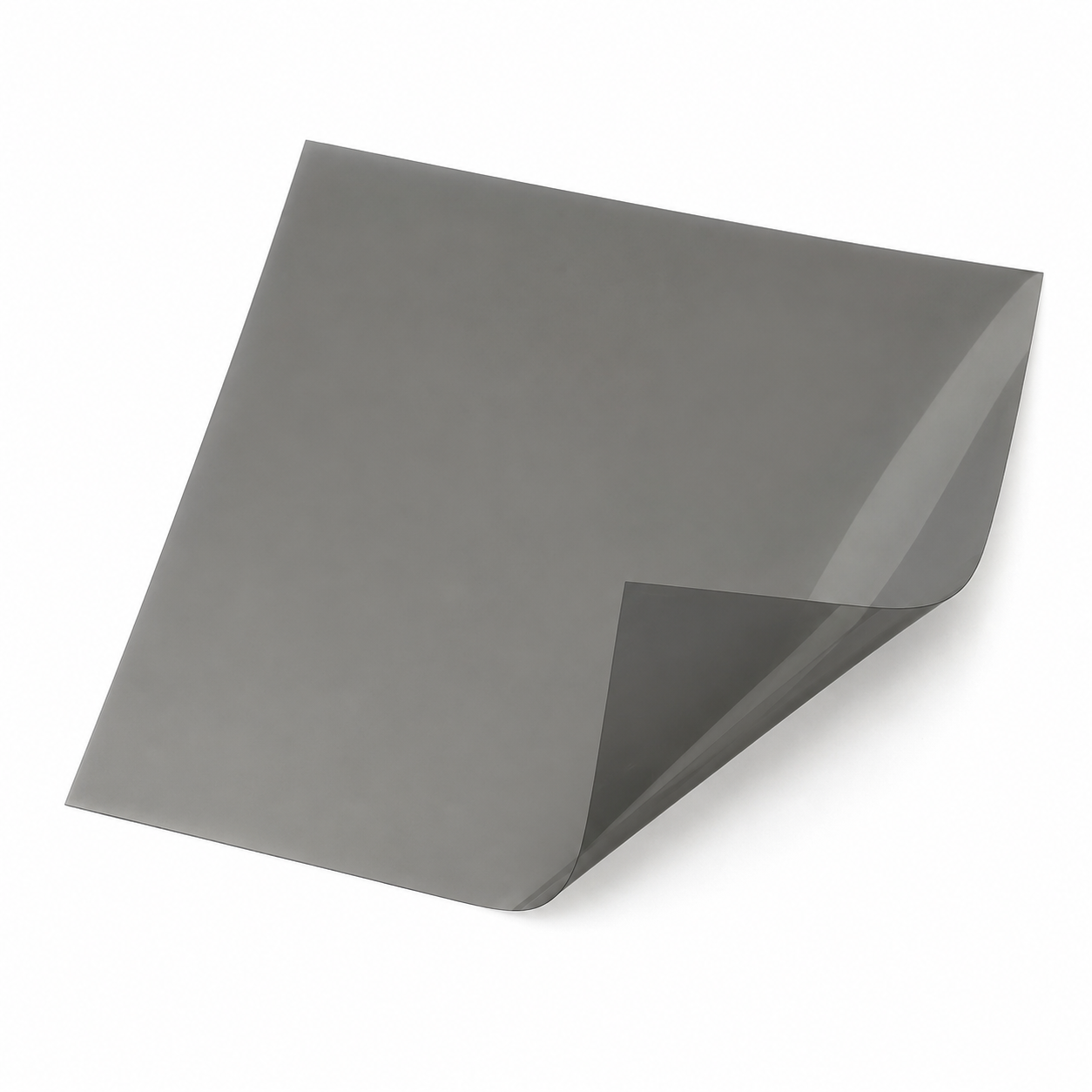
A neutral-density filter placed in front of one eye reduces the amount of light reaching the corresponding retina. Unequal retinal illumination is associated with a difference in the processing time of visual signals. Information from the dimmed eye is processed with a greater delay than information from the eye viewing the brighter image.
The effect can be induced in this way in a person without visual impairment. However, the filter itself does not carry a three-dimensional image. It contains no left and right frames, does not separate two projections, and does not create geometrically different perspectives. It primarily introduces an asymmetry in illumination and, with it, a temporal asymmetry.
This is precisely why describing the Pulfrich effect as a result of lens tinting would be misleading. What matters is the difference in brightness between the images reaching the two eyes and the resulting delay. The filter is a means of inducing this difference, not an independent generator of depth.
How Is Time Converted into Apparent Depth?
To understand the mechanism, it is useful to consider the successive stages. The eyes observe the same moving object, but the signals are not processed at the same rate. During the interval corresponding to the resulting delay, the object has time to change position. The visual system therefore compares information relating to slightly different phases of motion.
This creates a difference between the position of the object represented in the signal from one eye and the position represented in the signal from the other. In binocular-vision terminology, such a difference in position may be described as disparity. Disparity is usually the geometric result of viewing a scene from two points separated by the interpupillary distance. In the Pulfrich effect, however, it may result from motion combined with a processing delay.
The simplest model is therefore as follows:
- one eye receives a darker image,
- the signal from that eye is processed with a greater delay,
- during this time, the observed object moves horizontally,
- the information from the two eyes corresponds to different positions of the object,
- the resulting difference may be perceived as a position in depth.
This explanation makes it clear why motion is not an addition to the effect, but its fundamental component. If the object's position does not change over time, the delay does not produce a corresponding shift in position. A static image therefore does not begin to look three-dimensional merely because one eye views it through an ND filter.
Why Does Horizontal Motion Matter?
In the classic demonstration, the pendulum moves horizontally, across the field of view. Such motion allows the temporal delay to translate into a difference in the horizontal position of the image for the two eyes. This is the type of difference that the binocular visual system can associate with depth.
It can be said that, in this particular case, time is converted into apparent geometry. However, this is not a literal conversion or a property of the film or object itself. It is the result of the visual system having to combine two pieces of information arriving with a small time difference.
For the same reason, the effect depends on the dynamics of the scene. In a static frame, there are no successive positions for the delay to separate. In a moving scene, however, different phases of motion may become the basis for an apparent shift into depth or toward the observer. This fact defines a fundamental limitation on the use of the phenomenon in screen demonstrations: not every scene contains motion suitable for producing a clear impression of three-dimensionality.
It Is Not a Classic Stereoscopic Pair
In classic stereoscopic photography, two images show a scene from two different viewpoints. An appropriate viewer or viewing method directs one image to the left eye and the other to the right. The disparity is then recorded in the material at the stage of photography, rendering, or subsequent preparation of the pair.
The Pulfrich effect works differently. A single moving presentation may be perceived as three-dimensional when there is a difference in processing time between the eyes. The apparent disparity need not be recorded as two simultaneous perspectives. It arises during viewing because the object moves between the moments represented by the signals from the two eyes.
This difference has practical consequences. An ordinary stereo pair can retain depth in a static image. In the Pulfrich effect, stopping the motion removes the mechanism responsible for producing the spatiotemporal discrepancy. The technique is therefore neither a substitute for stereophotography nor a universal method of presenting arbitrary frames in three dimensions.
Spatial Disparity or Also a Temporal Difference?
The explanation based on delay and the resulting disparity is useful, but it does not settle the scientific interpretation of the phenomenon. Studies of the Pulfrich effect point to a debate over whether the mechanism can be explained solely by the spatial difference in position caused by the delay, or whether perception also takes into account the temporal difference itself between the binocular images.
These two levels of description must be distinguished. The undisputed starting point is that unequal retinal illumination leads to a difference in processing time and, with a moving stimulus, an apparent shift in depth occurs. The more detailed question concerns precisely how the visual system represents and combines spatial and temporal information.
The simple formula “delay equals disparity” should therefore not be presented as a complete resolution of all aspects of perception. It is a clear functional model that accurately links the filter, motion, and the impression of depth. However, the scientific description of the process leaves room for a more complex role of time in binocular vision.
See for Yourself: The Classic Pendulum Demonstration
The source package describes a simple demonstration: observe a pendulum moving horizontally while placing a neutral-density filter in front of one eye. The actual motion remains planar, while the perceived trajectory may acquire a depth component and resemble three-dimensional motion.
The key here is the ability to compare the two situations directly. Without the filter, both eyes process images at similar illumination levels. Once the image for one eye is dimmed, a temporal difference appears. If the object continues moving horizontally, this may be perceived as a change in its position in depth.
The demonstration also shows what the Pulfrich effect does not do. Simply looking at a stationary object through a filter should not be equated with this technique. It requires the interaction of illumination asymmetry, processing delay, and appropriate motion.
An Effect Based on Time, Not Color
The Pulfrich effect occupies a special place among methods associated with 3D imaging. It is not based on two cameras, a recorded pair of perspectives, or the separation of images by color. It is based on a difference in the speed of visual-information processing after the illumination of one retina is reduced.
The shortest accurate summary is therefore: one eye receives a darker image, its signal is delayed more, and a horizontally moving object occupies different positions in the corresponding signals. The visual system may interpret this discrepancy as depth. It is this combination of time and motion—not the dimming of the lens alone—that creates the characteristic impression of an apparent orbit.