
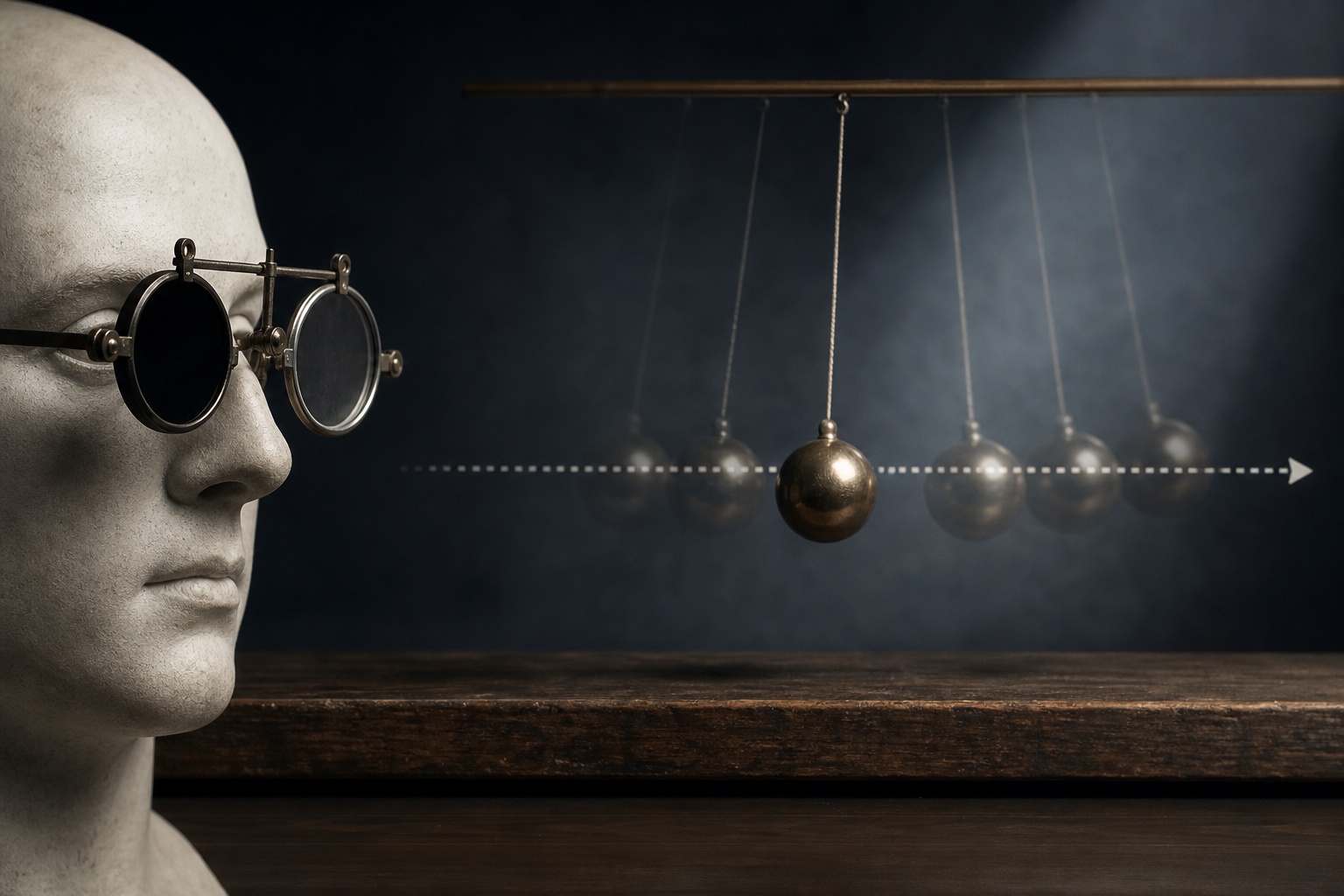
The Pulfrich Effect: When Visual Delay Creates Depth
The Pulfrich effect requires neither two cameras nor two recorded perspectives. The impression of depth arises when dimming the image for one eye delays its processing while the observed obj...
Portal publications about the history of stereoscopy, 3D techniques, photography, film, optics, lenticular and modern spatial technologies.
The Pulfrich effect requires neither two cameras nor two recorded perspectives. The impression of depth arises when dimming the image for one eye delays its processing while the observed obj...
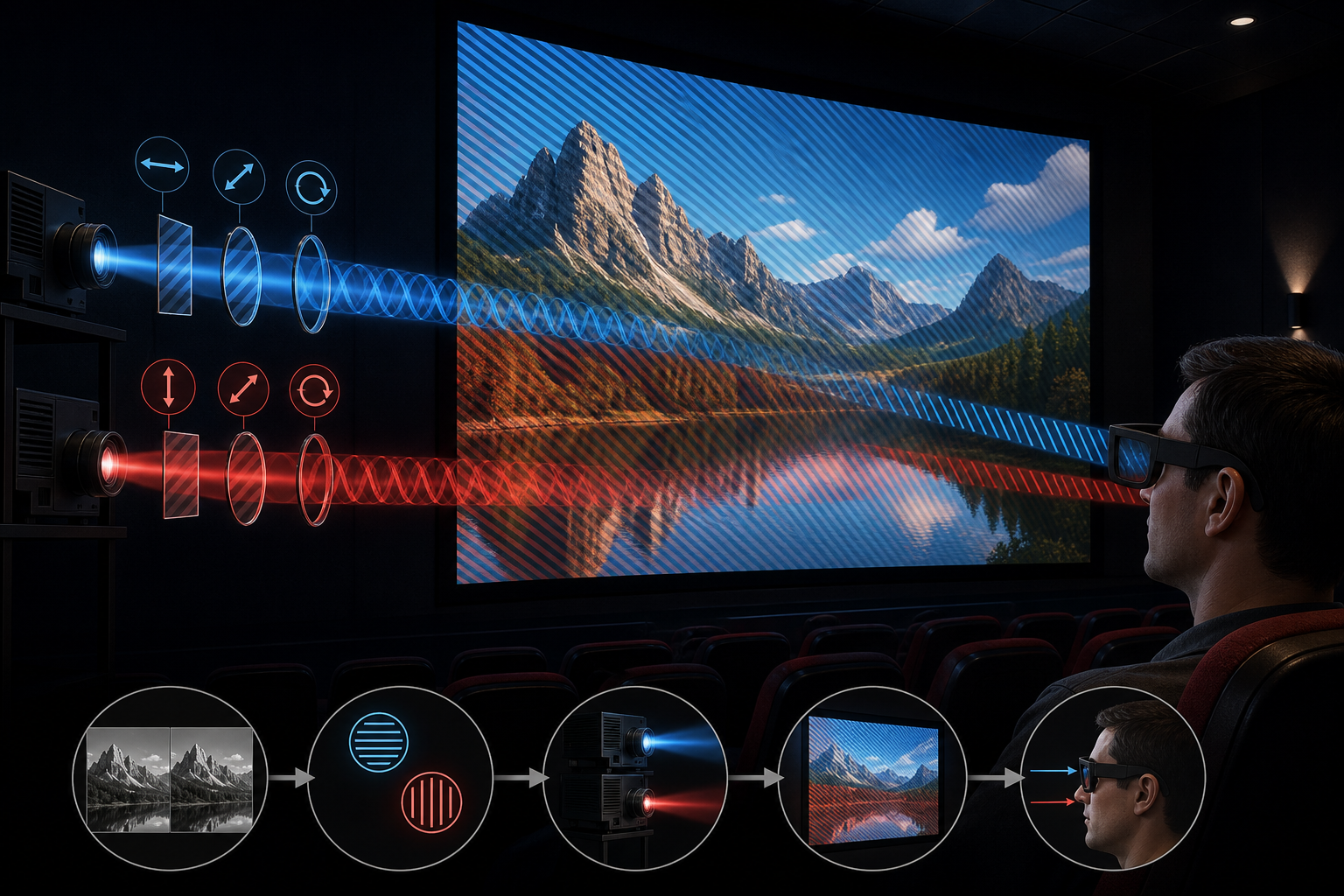
In polarization-based cinema, the two views of a stereo pair can occupy the same screen because they differ in the polarization state of the light. The appropriate filters in the glasses dir...
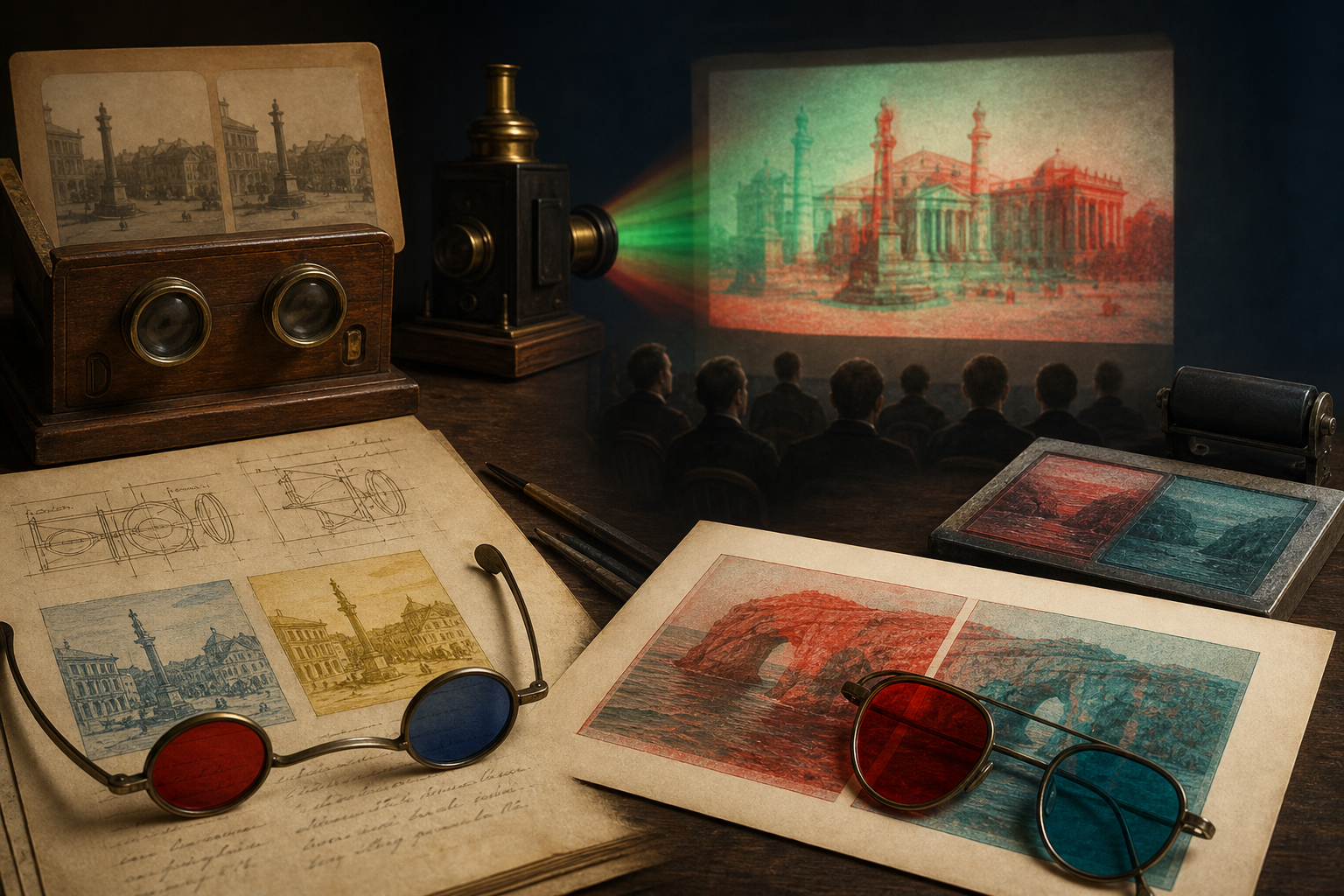
The anaglyph did not immediately appear in the form of a red–cyan image and paper glasses. Its development involved at least three distinct stages: experiments with color separation of views...
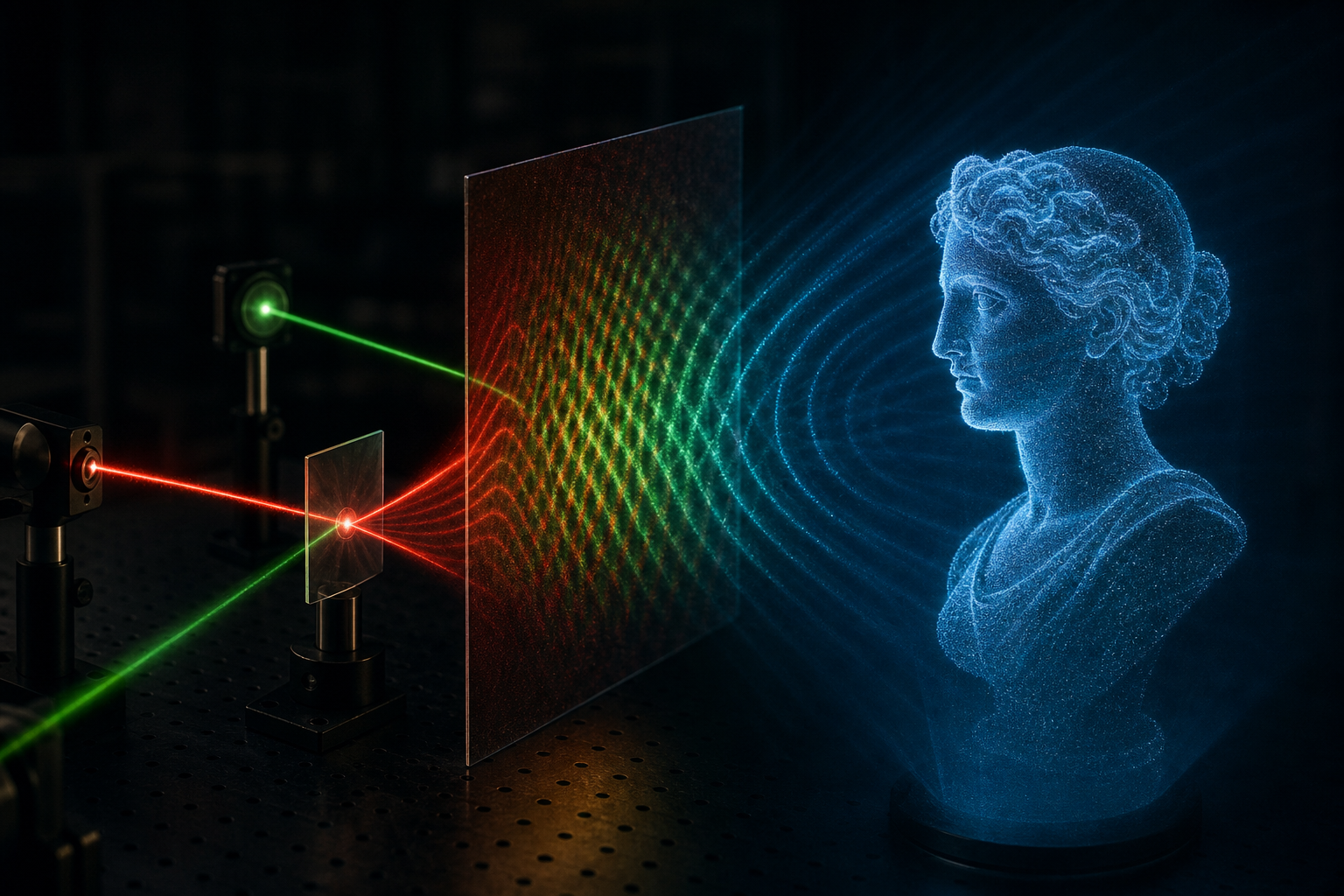
Classical stereoscopy provides the observer with prepared views, while holography records the information needed to reconstruct a light wave. We explain the roles of phase, interference, dif...