There is no single inventor to whom the entire technology can be attributed. An important step was taken by Nobel Prize winner Gabriel Lippmann, who in 1908 proposed “integral photography,” using a dense array of microlenses to record space from multiple directions. It was one of the foundations of later autostereoscopic techniques.
Swiss inventor Walter Hess came much closer to the modern lenticular process. In 1912, he filed a patent for a stereoscopic image using an array of optical elements placed over interlaced images. The patent was granted in the USA in 1915.
The real revolution, however, came in the 1930s and 1940s. Victor Anderson developed technology enabling the industrial production of multi-frame images, while the company later established as Vari-Vue turned lenticular printing into a mass-market product. The company popularized terms such as “lenticular,” “Magic Motion,” and “Winkies”—images whose subjects winked as the card was moved. Vari-Vue was formally incorporated in 1948, and over the following decades it produced millions of animated and three-dimensional images.
The Postcard Craze
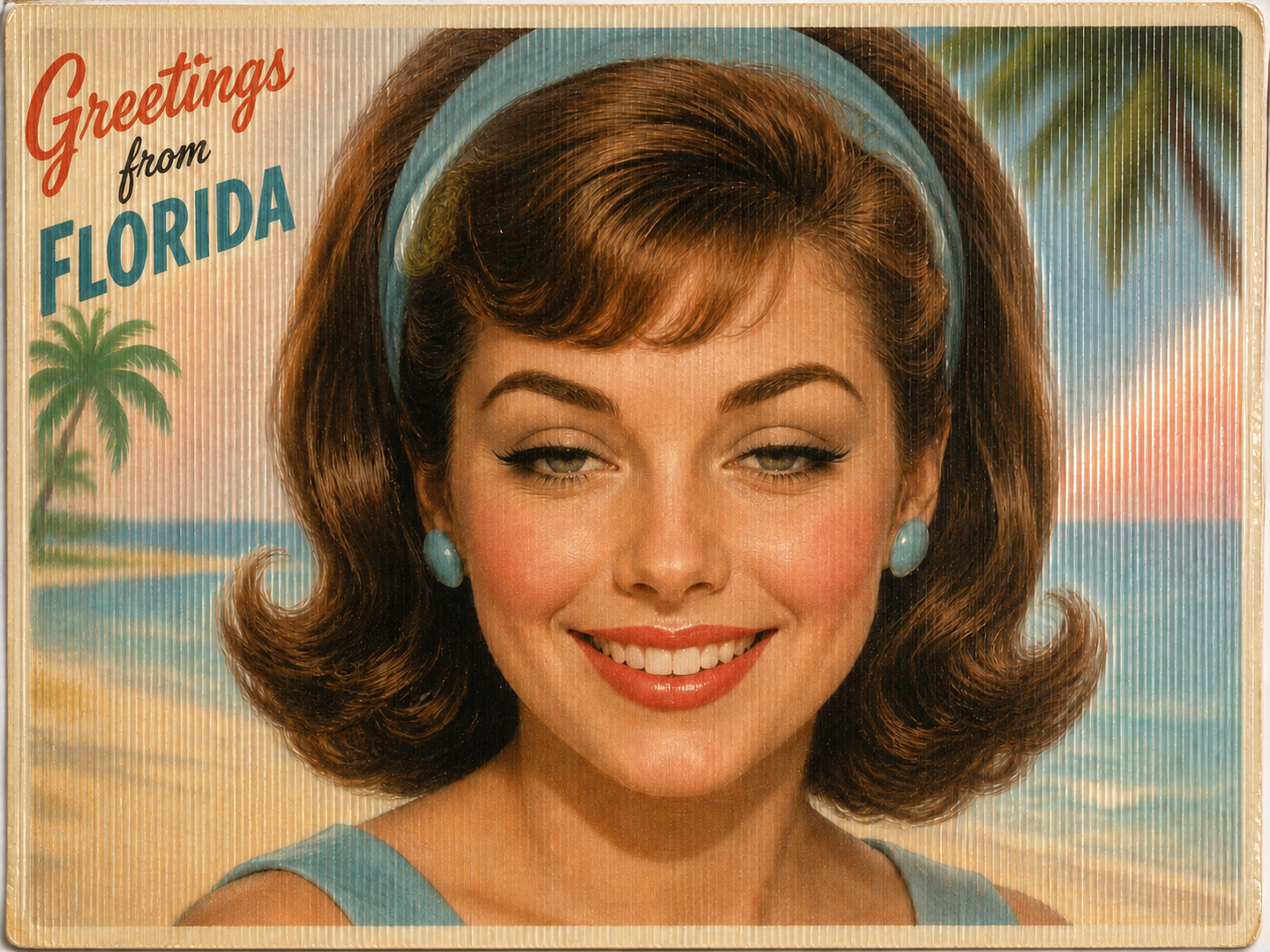
In the 1960s, the most iconic symbol of the technology became the lenticular postcard. Kiosks and tourist shops across Europe sold city views that changed when the card was tilted, moving animals, religious images, and, above all, the famous winking models and pin-up girls. Some cards showed two poses, while others simulated a head movement, smile, or wink. There were even versions in which the model’s outfit changed along with the viewing angle.
The technology quickly expanded beyond postcards. Vari-Vue produced political buttons, toys, greeting cards, advertisements, wall pictures, and even large-format billboards. Between 1957 and 1972, the company’s factory in Yonkers reportedly produced more than 200 million lenticular images annually.
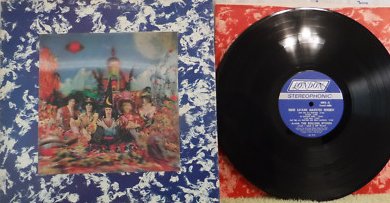
Lenticular printing also entered popular culture. One of the best-known examples is the first edition of The Rolling Stones – Their Satanic Majesties Request from 1967, whose cover featured a three-dimensional photograph of the band.
From Postcards to Digital Printing
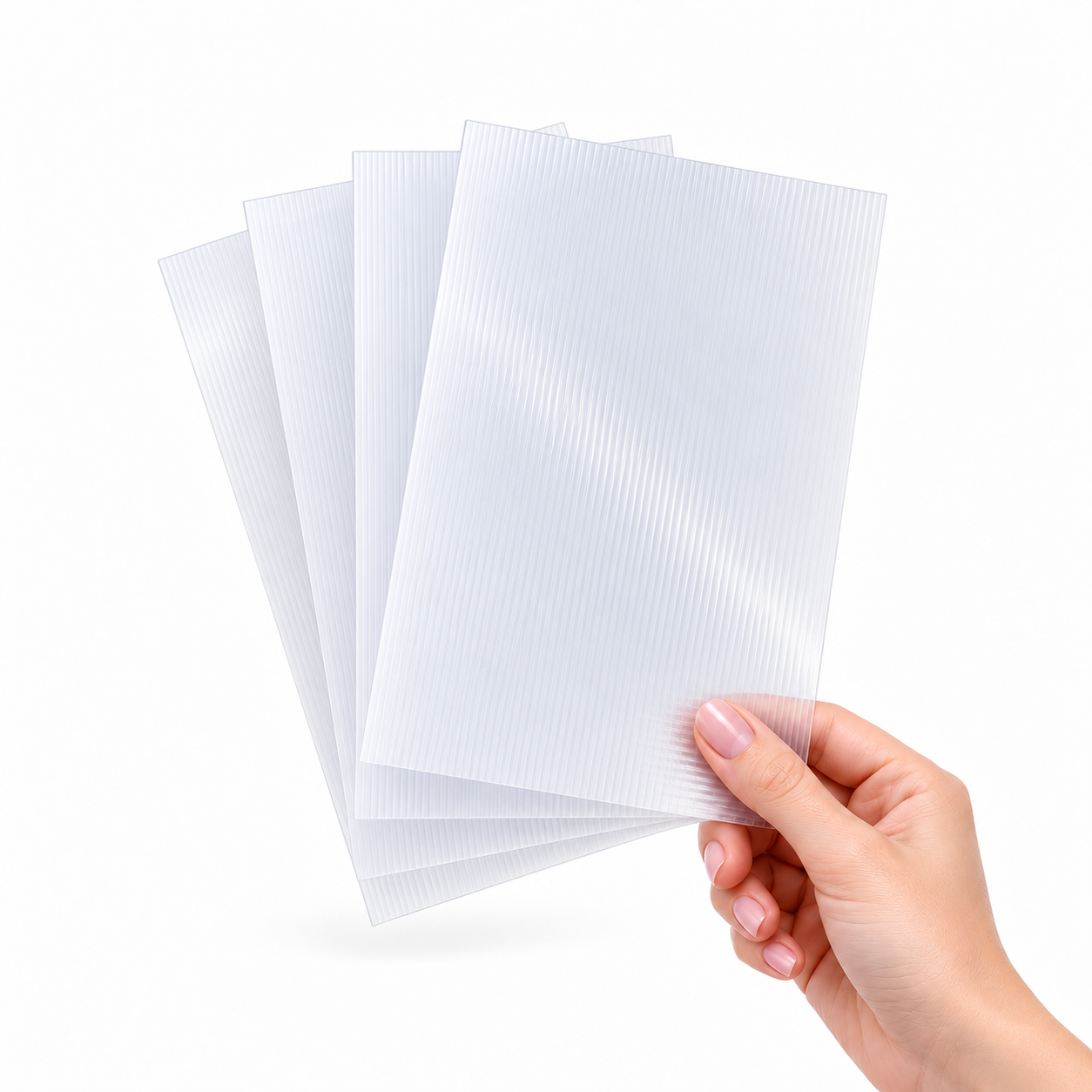
In the past, creating a good 3D image required specialized multi-lens cameras and precise assembly of the material. Today, successive views can be generated digitally, interlaced by computer (interlacing), and printed directly onto a lenticular sheet, or the print can be laminated with lenticular film.
Modern lenticular printing is therefore enjoying a new lease of life, appearing in premium packaging, point-of-sale advertising, covers, posters, trading cards, works of art, and document security features. Effects are no longer limited to a simple “wink.” Multi-frame animation, morphing, zoom, flip, and realistic 3D images with multiple viewpoints are now used.
And although today’s digital screens can display almost anything, a plastic card whose image moves without batteries, electronics, or glasses can still surprise us in exactly the same way it did sixty years ago.