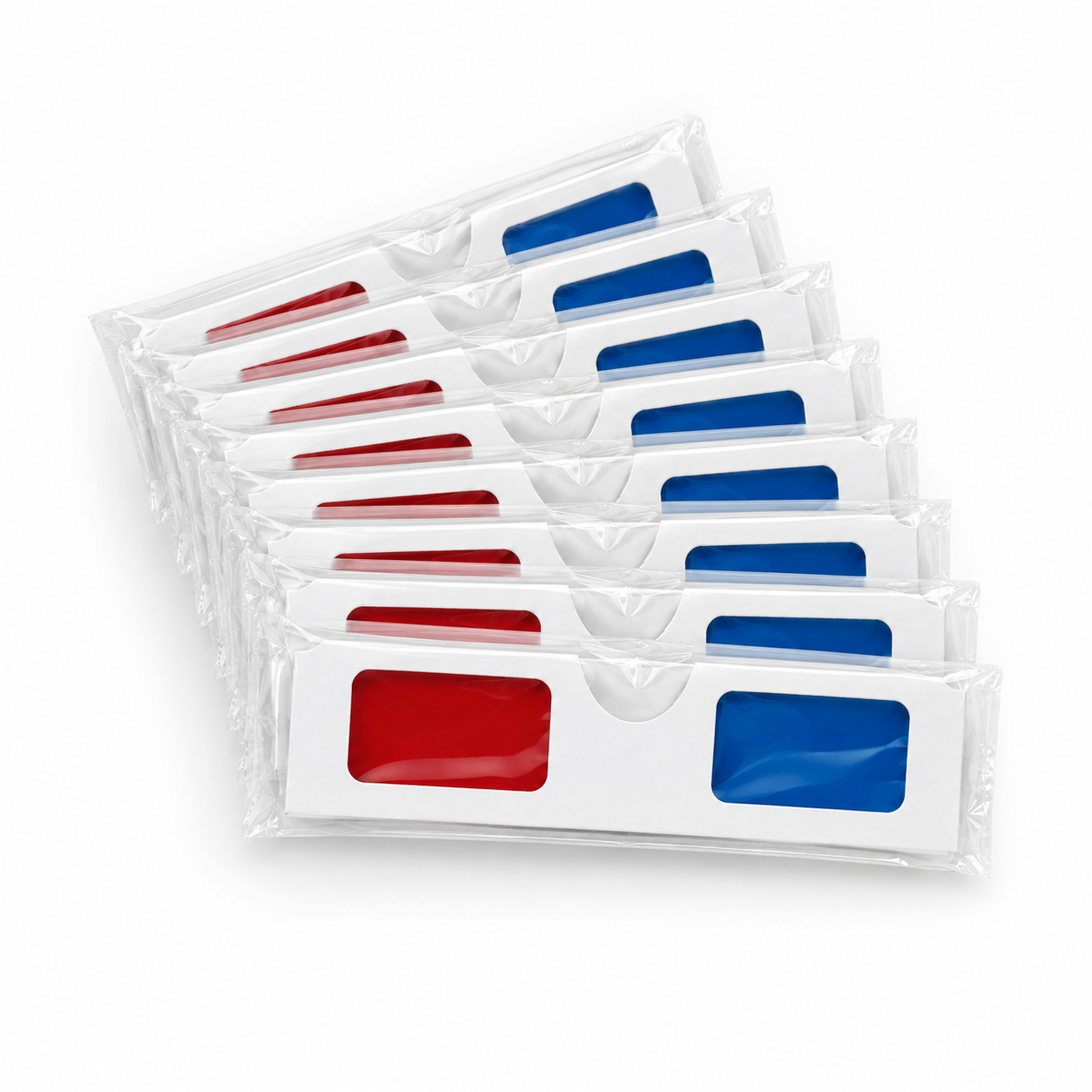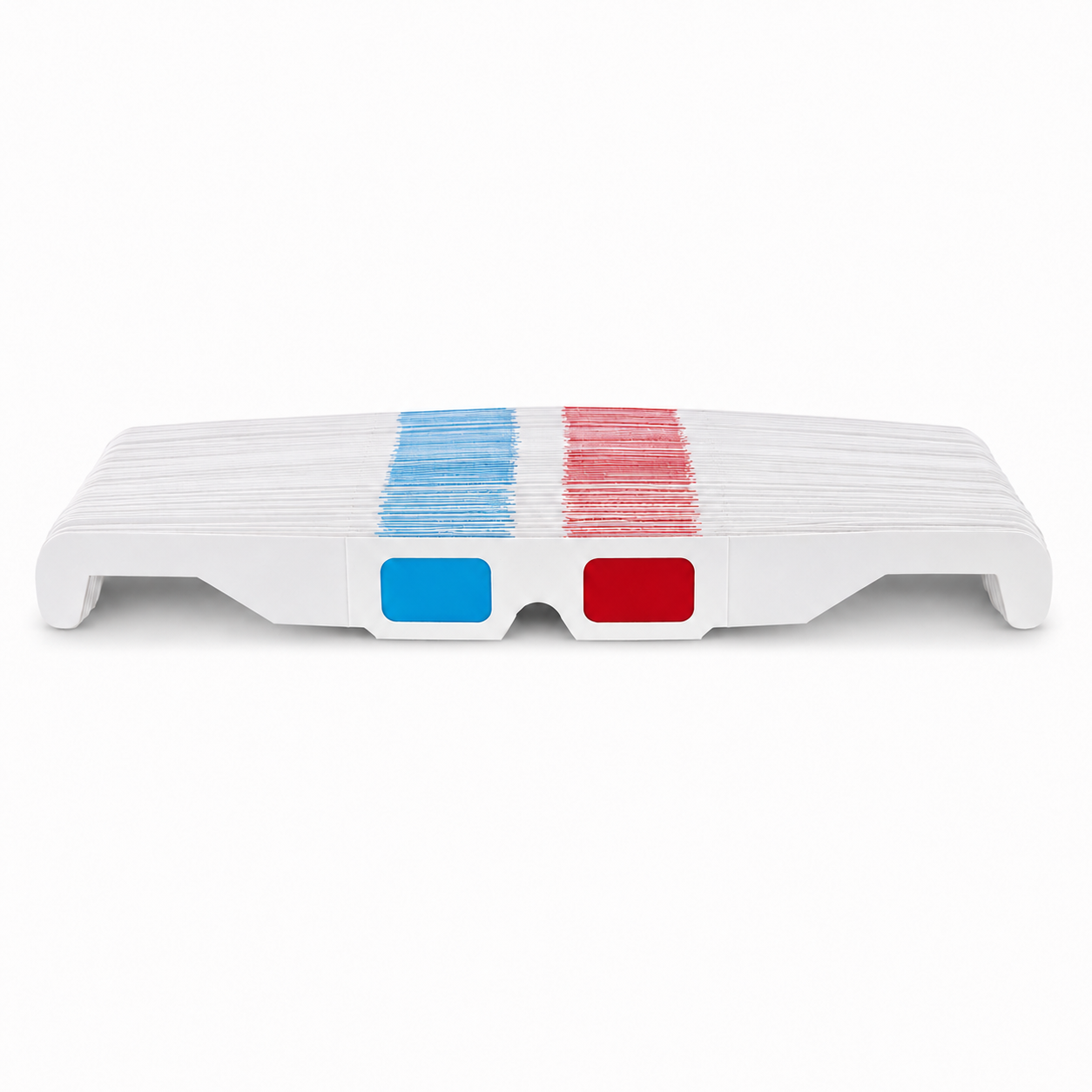

Best of all, to take your own 3D photo, you do not need a specialist camera with two lenses. An ordinary smartphone is enough.
We are not talking about a 3D model intended for 3D printing. This is classic stereophotography—two photos of the same subject taken from two slightly offset viewpoints. Just like our left and right eyes observe the world.
📸 How do you do it?
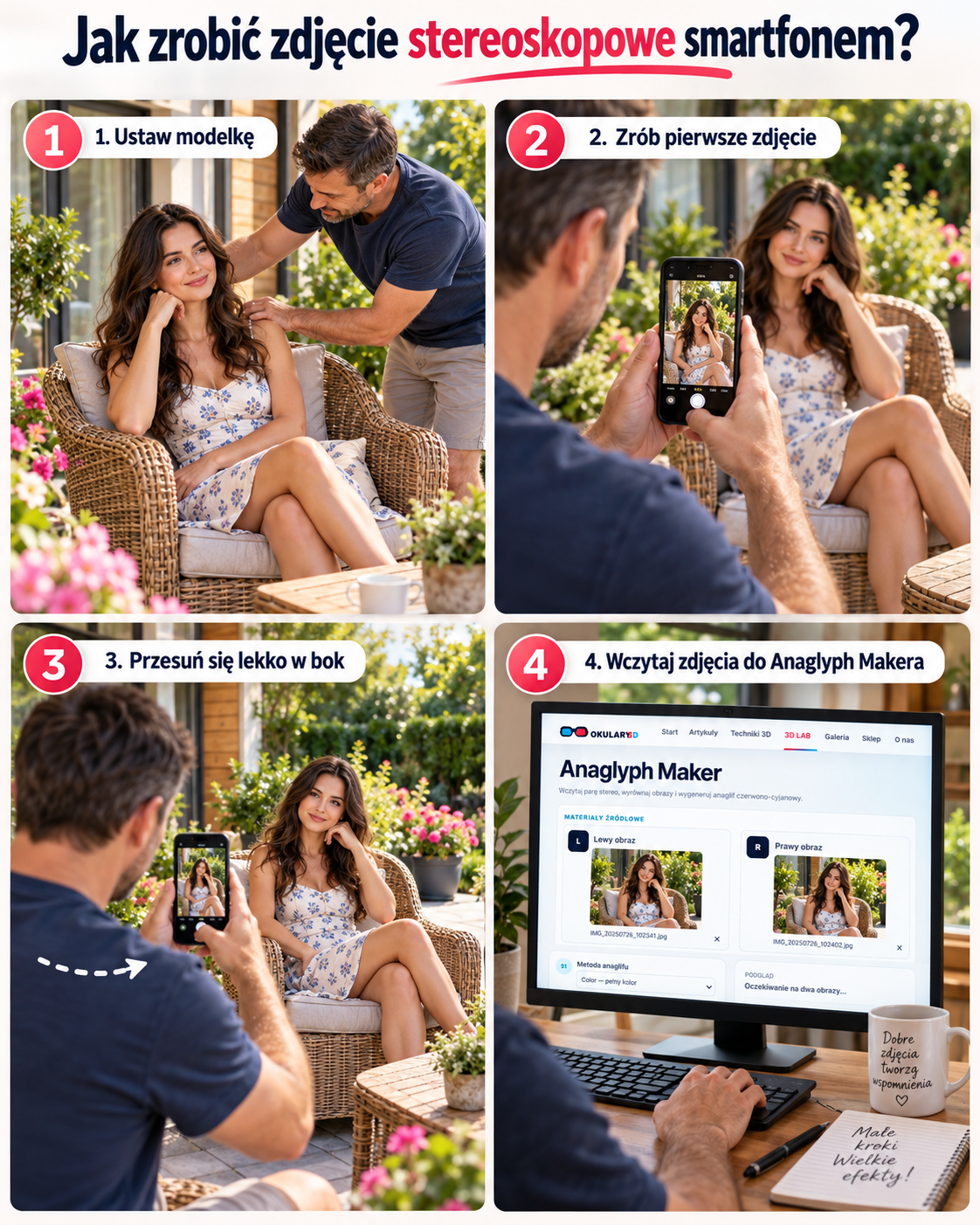
Position the person or object you are photographing so that they remain still while the photos are being taken. Take the first photo, then move the smartphone horizontally a few centimeters (about 7-10 to the right) and take the second one. Do not rotate the phone around the photographed object—the most important thing is to shift the entire camera slightly to the side.
And that is basically it—you now have the material for a stereoscopic photo.
You can then load both photos into our Anaglyph Maker in the 3D LAB at okulary-3d.pl. The program will combine the left and right images into a red-cyan anaglyph, which you can view on a smartphone or computer screen, or simply print using an ordinary color printer.
🔴🔵 Put on anaglyph glasses, and suddenly the flat photograph is no longer flat.
(Check your result: put on the glasses, use the slider at the bottom to adjust the offset of the red and blue colors, and set it to obtain a perfect three-dimensional image)
The person is on one plane, the armchair on another, the flowers may appear to come out in front of the screen, and the garden extends far behind the photographed model. This is the moment that can be genuinely surprising the first time.
Interestingly, our great-great-grandparents experienced similar emotions. Stereoscopic photography was extremely popular at the end of the 19th century, and in the first half of the 20th century it was an important branch of photography. People used stereoscopes to view landscapes, cities, events, family photographs, and distant places—giving them a taste of travel in an era before television existed.
Today, you can carry out the entire experiment in just a few minutes using a device you carry in your pocket.
And once you have mastered your first stationary portrait, the real fun begins: flowers, toys, cars, architecture, landscapes, models, family photographs, or vacation photos. The more objects there are at different distances from the camera, the more interesting the spatial effect can be.
👉 Pick up your smartphone.
👉 Take two photos.
👉 Combine them into an anaglyph.
👉 Put on red-cyan glasses.
👉 And see your own photograph in a completely different way.
Give it a try—taking your first 3D photo yourself is truly satisfying.
At okulary-3d.pl, you will find tools for experimenting with stereoscopic photography, guides, anaglyph glasses, and other materials needed to begin your own adventure with 3D.
Because photography does not always have to end in two dimensions. 😉📷🕶️
#stereoscopy #3Dphotography #3Dphotos #anaglyph #smartphone #photography #3DLAB #3Dglasses #okulary3dpl